Solution

Zero-Trust Workload Access Controls

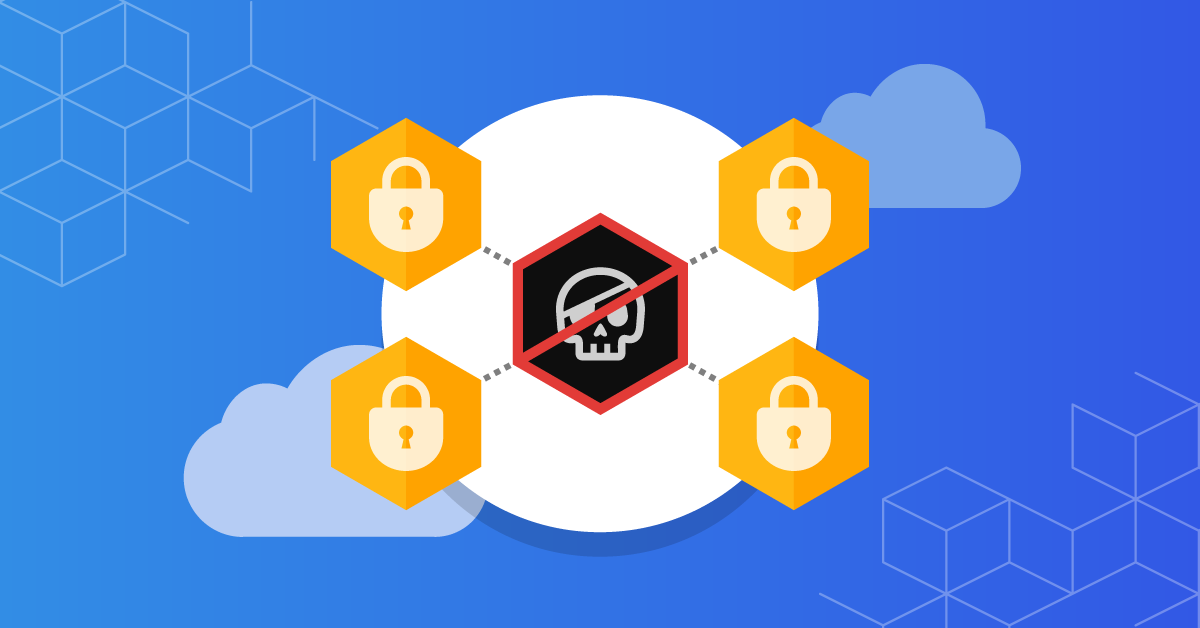
Reduce the attack surface of cloud-native applications by enabling secure, fine-grained, zero-trust access from Kubernetes pods to resources outside the cluster

Benefits

Two overlapping blue parallelograms

Granular Access

Fine-grained access to resources outside of the cluster, like databases, cloud-managed services, third-party APIs, and other applications that are not yet containerized
Two overlapping blue parallelograms

Production-Ready

Safely and securely transition Kubernetes workloads from pilot to production
Two overlapping blue parallelograms

Maintain Compliance

Maintain compliance with existing enterprise and regulatory security requirements

Capabilities

Edit Policy - DNS Policy Screenshot

DNS Policies

Author DNS policies for fine-grained access
  • Calico extends the open-source policy model so that fully qualified domain names (FQDN / DNS) can be used to allow access from a pod or set of pods (via label selector) to external resources (databases, cloud services, third-party APIs).
  • Security policies based on domain names (DNS) enable fine-grained controls that are enforced at the source pod, eliminating the need for a firewall rule or equivalent. DNS endpoints can be defined as an exact address (e.g. google.com) or can include wildcards (e.g. *.google.com). DNS endpoints can also be used within Global Network Sets.
Egress Controls Diagram

Egress Gateway

Use Egress Gateway to integrate with existing network firewalls
  • Calico’s Egress Access Gateway assigns a fixed, routable IP to a Kubernetes namespace. All egress pod traffic from that namespace is assigned that routable IP address to identify the workload running within that namespace. This enables the cluster to securely scale while preserving the limited number of routable IPs and leveraging non-routable IPs for all other pod traffic within the cluster.
  • A single firewall rule can be defined that allows all pods within a namespace to securely access resources outside of the cluster, in effect establishing a universal firewall. The platform team only has to manage one firewall rule instead of many, saving time and eliminating the burden of multiple firewall change requests to the security team. Beyond the cluster, enterprise monitoring systems such as SIEMs can identify an application/workload in a Kubernetes namespace via its source IP address.
  • Enterprise security teams can leverage familiar, existing firewall tools, processes, and architecture, thereby simplifying and facilitating Kubernetes adoption and deployment.
Edit Policy Zero Trust Workload Access Controls CIDR Screenshot

Global and namespaced NetworkSets

Use IP Subnet/CIDR ranges in security policies
  • Calico GlobalNetworkSets and namespaced NetworkSets can use CIDR notations for a range of IPs to use in a network policy, to automatically update access control policies for all the IPs described by the CIDR notation. Calico NetworkSets can be used to apply policy to control traffic going to or coming from external, non-Calico networks. And using Calico NetworkSets, you can easily scale out by using the same set of IPs in multiple policies.

How It Works

Zero Trust Workload Security / Egress Gateways

Calico helps you granularly restrict access from Kubernetes clusters to resources outside the cluster in different ways. This not only protects your cluster resources, it provides you with the flexibility to align with your specific architecture. Fully qualified domain names can be used in DNS policies to control access from a pod or set of pods to an external resource. You can enforce the controls from a firewall outside the cluster using the Egress Gateway. Or you can securely enable access by using NetworkSets to limit IP ranges for egress and ingress traffic to/from workloads.

Additional resources:

  • Access control best practices
  • Whitepaper
  • Hands-on workshop

Available on Microsoft Azure, AWS, and Google Marketplace

Get started right away on Azure, AWS, or Google Cloud—every Calico component you need to get up and running is ready to go.

Microsoft Azure, AWS, and Google Cloud logos.

Resources

Zero trust in the cloud: Best practices and potential pitfalls
Blog

Zero trust in the cloud: Best practices and potential pitfalls

Secure cloud-native applications with zero trust. Learn zero trust implementations best practices and pitfalls.
Learn More
Zero-Trust for Cloud-Native Workloads Maturity Assessment
Assessment

Zero-Trust for Cloud-Native Workloads Maturity Assessment

This survey will help you understand what you are missing and guide you through what is required to successfully start and continuously improve your security posture for zero-trust workloads
Learn More
Calico Logo

Ready to Get Started?

Get started for free or request a demo to see Calico in action

X