










We’re excited to announce the release of Calico v3.31, 🎉 which brings a wave of new features and improvements.
For a quick look, here are the key updates and improvements in this release:
- Calico NFTables Dataplane is now Generally Available
- Calico eBPF Dataplane Enhancements
- Simplified installation: new template defaults to
eBPF, automatically disableskube-proxyviakubeProxyManagementfield, and addsbpfNetworkBootstrapfor auto API endpoint detection. - Configurable cgroupv2 path: support for immutable OSes (e.g., Talos).
- >>Learn More: See how Calico v3.31 makes eBPF installation frictionless and simplifies setup in our Zero-Trust with Zero-Friction eBPF in Calico v3.31 blog
- Simplified installation: new template defaults to
- Calico Whisker (Observability Stack)
- Improved UI and performance in Calico v3.31.
- New policy trace categories: Enforced vs Pending.
- Lower memory use, IPv6 fixes, and more efficient flow streaming.
- Networking & QoS
- New bandwidth and packet rate QoS controls across all dataplanes.
- DiffServ (
DSCP) support: prioritize traffic by marking packets (e.g.,EFfor VoIP). - Introduces new
QoSPolicyAPI for declarative traffic control.
- Encapsulation & Routing
- Tech Preview: Felix now handles encapsulation routes (
IP-in-IP,no-encap) directly — no BIRD required!
- Tech Preview: Felix now handles encapsulation routes (
- NAT Control
- New
natOutgoingExclusionsconfig for granular NAT management. - Choose between
IPPoolsOnlyorIPPoolsAndHostIPsfor flexibility.
- New
- BGP Enhancements
- Support for custom local ASNs per peer, enabling
eBGPand advanced route reflector setups.
- Support for custom local ASNs per peer, enabling
- Performance & Usability
- Even faster IP Address Management startup.
- Reduced memory usage and improved selector indexing.
- New
calicoctl validatecommand to validate Calico resources offline and in CI/CD pipelines. AutoHostEndpointnow supports bothInterfaceCIDRsandInterfaceSelectors.
Calico NFTables is now Generally Available (GA)!
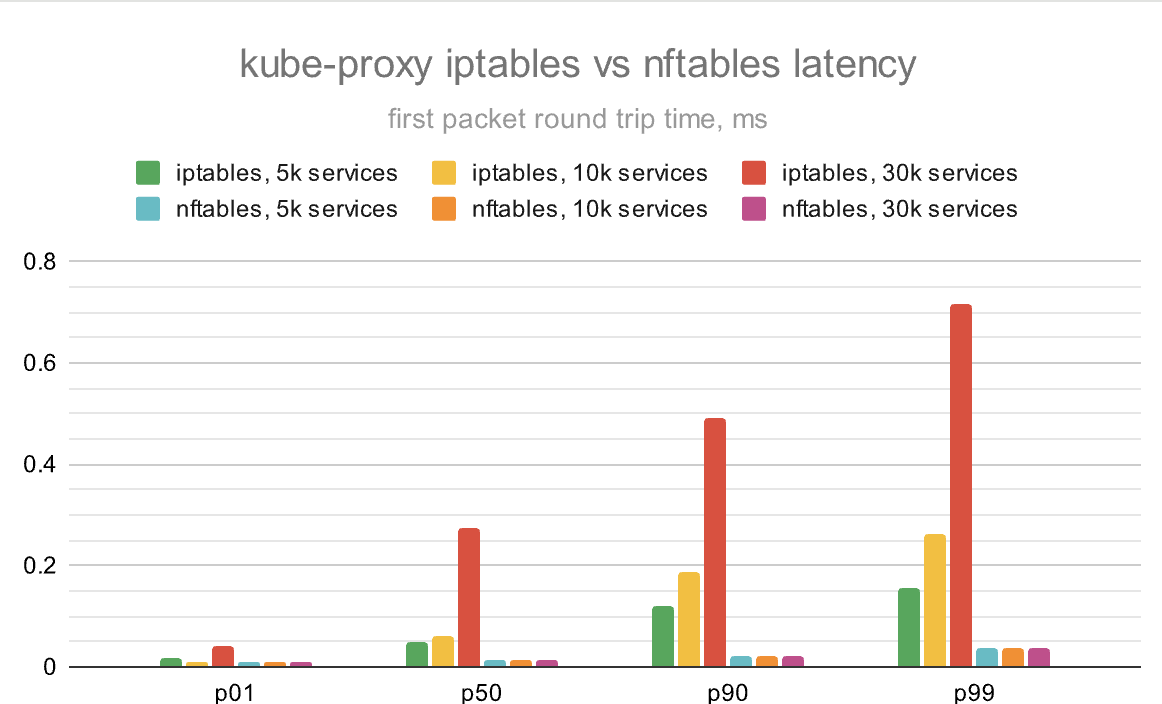
We’re excited to announce that Calico’s NFTables data plane is now GA! As more Linux distributions adopt NFTables as the netfilter tool of choice, it’s clear that NFTables is becoming the successor to IPTables in cloud native networking.
Calico users have already been testing and adopting the NFTables data plane through our tech preview with Calico v3.29, and in this release we are making our nftables data plane GA. Compared to its predecessor, iptables, NFTables brings significant improvements in efficiency and performance by streamlining how networking changes are programmed in the Linux kernel, helping you run Kubernetes networking and security at scale with less overhead.
Calico eBPF data plane Enhancements
Calico v3.31 makes installation easier and more automated. The new installation template defaults to the eBPF data plane, automatically disables kube-proxy via the kubeProxyManagement setting, and uses bpfNetworkBootstrap to detect API server endpoints automatically. It also supports dynamic cgroupv2 paths, improving compatibility with immutable operating systems like Talos Linux. For a step-by-step walkthrough, check out the following video:
eBPF Based Installation Resource
With Calico v3.31, installing the eBPF data plane using the Calico Operator on kubeadm-based Kubernetes clusters is now seamless. It no longer requires any manual steps. Simply use the new eBPF installation template.
- 📄
eBPFtemplate: A new installation template now defaults to usingeBPFas the data plane, reducing manual configuration. - 🔑 New installation options: it’s now simpler to install directly with the
eBPFdata plane:
kubeProxyManagement: Automatically disableskube-proxy, since CalicoeBPFfully replaces it.bpfNetworkBootstrap: In an environment wherekube-proxyexists before installing Calico, Calico learns thekubernetesservice endpoints and programs the endpoints into theeBPFdata plane automatically so that no manual configuration is needed.
This simplifies the installation/migration process and ensures that Calico’s eBPF data plane is configured optimally with minimal manual steps.
spec:
  calicoNetwork:
    bpfNetworkBootstrap: Enabled
    kubeProxyManagement: Enabled
...
Configurable cgroupv2 path
Immutable Linux distributions are becoming increasingly popular, and each has its own way of managing system resources and storage. In Calico v3.31, we’ve added a new Felix configuration field:
cgroupV2Path: Allows you to specify a custom cgroup mount path, improvingeBPFcompatibility with immutable OSes such asTalos Linuxand others.
This ensures Calico’s eBPF data plane runs smoothly across a wide range of modern OS environments, making adoption easier and more reliable.
apiVersion: crd.projectcalico.org/v1
kind: FelixConfiguration
metadata:
 name: default
spec:
 cgroupV2Path: "/sys/fs/cgroup"
The following video shows you how to install Calico on Talos Linux:
Calico Whisker (Calico Observability Stack)
Whisker has quickly become a favourite in our community, with users loving its intuitive UI. In Calico v3.31, we’re taking it a step further by improving UI for policy traces, reduced memory use, IPv6 binding fixes, and more efficient flow streaming in Goldmane. Now, policies evaluated for each flow are clearly categorized into two groups:
- Enforced: Policies that are currently active and shaping traffic flows.
- Pending: If a flow matches a staged network policy, the Pending section lists all the policies that would apply to that flow if the staged policies were enforced. It also shows which policies would apply to any new connections that match the same flow once those staged policies become active.
Networking
Calico Bandwidth Management Quality of Service (QoS)
New burst and peak rate controls for bandwidth and packet rate QoS are now available in Linux multiple dataplanes: eBPF, IPTables, and NFTables.
These improvements give operators finer control and faster responsiveness when managing traffic QoS in OpenStack and Kubernetes environments.
annotations:
   # Bandwidth peakrate and minburst
   qos.projectcalico.org/ingressPeakrate: "1000000"   # in bits per second
   qos.projectcalico.org/egressPeakrate: "500000"     # in bits per second
   qos.projectcalico.org/ingressMinburst: "1500"      # defaults to MTU if lower
   qos.projectcalico.org/egressMinburst: "1500"
   # Packet rate limits with burst
   qos.projectcalico.org/ingressPackets: "1000"       # packets per second
   qos.projectcalico.org/egressPackets: "800"         # packets per second
   qos.projectcalico.org/ingressPktBurst: "200"       # burst packets
   qos.projectcalico.org/egressPktBurst: "200"
Traffic Classification

In Calico v3.31, we’re expanding Quality of Service (QoS) capabilities with Differentiated services (DiffServ) support for workloads and hostendpoints.
This enhancement allows you to classify and prioritize traffic leaving your cluster, ensuring that critical traffic is prioritized even when it leaves your cluster.
By setting the qos.projectcalico.org/dscp annotation on a Calico hostendpoint, Calico can apply the appropriate DSCP marking to egress packets. Think of it like slapping a VIP badge on your packets, no lineups—straight to the fast lane of your QoS-aware network.
This update introduces a new DSCP type supporting both numeric values (0–63) and common string values, and corresponding data plane logic to enforce DSCP marks in multiple dataplanes. Because DSCP is embedded in the 6-bit IP packet header, downstream devices in your network can use these markings for forwarding and prioritization, making it easier to integrate Kubernetes workloads into existing QoS-aware environments.
How it works:
- DSCP support for both numeric values (0–63) and string names (AF11, EF, CS5).
- New
QoSPolicyAPI for Kubernetes-native traffic control. - Enforced via data plane using
iptablesornftables.
Why it matters:
- Prioritize critical workloads: latency-sensitive traffic like video or trading gets expedited handling.
- Simplify configuration: declaratively set QoS in manifests instead of manual DSCP configs.
- Future-ready: works across both
iptablesandnftablesdataplanes.
apiVersion: projectcalico.org/v3
kind: HostEndpoint
metadata:
  name: hep-with-dscp
  annotations:
    qos.projectcalico.org/dscp: "cs5"
Visualizing the impact:
🟢 Video/Voice traffic → prioritized with EF
🔵 API traffic → marked with AF21
⚪ Batch jobs → default BE
Encapsulation Routes Programmed Direct From Felix
Encapsulation isn’t new to Calico, but in v3.31, Felix takes over responsibility for IP-in-IP and no-encapsulation routing. Previously, BIRD handled this through BGP. Moving it into Felix simplifies operations, reduces dependencies, and speeds up live upgrades in large clusters:
apiVersion: crd.projectcalico.org/v1
kind: FelixConfiguration
metadata:
 name: default
spec:
 programClusterRoutes: Enabled
Granular Control Over natOutgoing (A Community Contribution!)
Calico v3.31 introduces finer control over NAT outgoing. Previously, enabling natOutgoing SNATed all traffic leaving an IPPool, including local cluster traffic.
Now, Felix introduces natOutgoingExclusions. This setting lets you define which destinations should be excluded from masquerading:
- IPPoolsOnly (default): Only traffic leaving the IPPool is SNATed.
- IPPoolsAndHostIPs: Both traffic leaving the IPPool and traffic to cluster hosts are SNATed.
This feature gives operators more flexibility in managing NAT behaviour, while maintaining backward compatibility. In a future release, we may consider switching the default value to IPPoolsAndHostIPs.
Example patch command:
kubectl patch felixconfiguration --type=merge default -p='{"spec":{"natOutgoingExclusions":"IPPoolsAndHostIPs"}}'BGP Enhancements
Previously, Calico used the node’s global ASN for all BGP sessions. With this update, you can now override that global value on a per-peer basis, unlocking powerful new deployment scenarios such as:
- eBGP with external routers
- Route reflector designs requiring custom local ASNs
kind: BGPPeer
apiVersion: projectcalico.org/v3
metadata:
  name: asn_override
spec:
  asNumber: 64516
  localASNumber: 65002
Performance & Usability
- Faster IPAM: Improved IP address allocation performance in large clusters (1000+ IPAM blocks) through more efficient server-side filtering.
- Parallel Startup: Felix now loads BPF programs in parallel, significantly reducing startup times.
- Memory Optimization: Felix deduplicates resource label keys and values, lowering memory usage at scale.
- Security and Compliance: TLS cipher suites are now configurable to meet enterprise security requirements.
#10380 - Performance Improvements: Additional optimizations include selector index deduplication, parallel BPF program loading, and reduced memory usage in controllers. #10272, #10771
calicoctl validateCommand: A new command that validates Calico resource definitions locally without applying changes, making it easier to test and troubleshoot configurations.- AutoHostEndpoint Enhancements: Building on the
InterfaceSelectorintroduced in v3.30 (a regex-based filter for matching node interface names), Calico v3.31 adds the newInterfaceCIDRsoption. This allows you to specify a list of CIDRs to match node IPs ensuring only addresses within those ranges are included as expected IPs.
Check out the full list of improvements in OpenStack and OpenShift in our release notes.
Click here to try Calico v3.31 Whisker UI Improvements in your browser