








What Are Service Mesh Solutions?
Service mesh solutions manage interactions between microservices within a distributed application. They provide a dedicated infrastructure layer to handle service-to-service communications, ensuring reliable, secure, and observable connections.
As distributed architectures become more complex, service meshes offer a centralized way to manage networking across multiple services without modifying the application code. By abstracting the complexities of communication, service meshes simplify tasks like traffic management, observability, security, and fault tolerance.
This abstraction enables developers to focus on building features rather than managing infrastructure. Service mesh solutions are particularly useful for managing microservices environments where service discovery, load balancing, and retries are essential for maintaining systems.
Many teams adopt a service mesh Kubernetes deployment to gain these capabilities natively alongside their existing workloads.
In this article:
- Key Features of Service Mesh Solutions
- Notable Service Mesh Solutions
- How to Choose Service Mesh Solutions
Key Features of Service Mesh Solutions
Traffic Management
Service meshes enable routing capabilities that go beyond basic load balancing. They allow developers to control traffic flow between services using configurable policies. These include routing based on HTTP headers, URL paths, or service versions, which is essential for A/B testing, canary releases, and staged rollouts.
In addition to dynamic request routing, service meshes provide traffic shaping features like rate limiting and request mirroring. They help test new features in production environments without affecting end users. Traffic can also be split between services based on weights, enabling gradual exposure of changes. These controls are defined through declarative configuration, often via a control plane.
Observability and Monitoring
Service meshes provide uniform observability across all services. They automatically inject proxies that capture metrics such as request count, success/failure rates, and latency distributions. They often integrate out-of-the-box with telemetry backends like Prometheus, Grafana, Jaeger, and Zipkin.
Beyond metrics, service meshes support distributed tracing, allowing teams to follow a single request as it moves across services. This helps identify slow components and track down errors in complex transaction paths. Logs collected from proxies can be aggregated and correlated with metrics and traces for deeper insight.
Security and Policy Enforcement
Security in service meshes is handled at the infrastructure level, minimizing the need for application-level security logic. Mutual TLS is used to encrypt traffic and verify the identity of both the client and server, protecting against man-in-the-middle attacks and spoofing. Additional security features often include secrets management, auditing, and integration with external identity providers.
Access policies define which services are allowed to communicate and under what conditions. These can include rules based on service identity, request attributes, or time-based constraints. Because policies are centrally managed and applied consistently, they reduce configuration drift and human error.
These mesh-level controls complement broader container security practices that protect workloads throughout their lifecycle.
Fault Tolerance and Resiliency
To maintain availability, service meshes introduce built-in resiliency features like retries with exponential backoff, configurable timeouts, and circuit breakers that prevent repeated calls to failing services. These mechanisms help applications recover gracefully from transient failures and reduce the likelihood of cascading errors.
Service meshes also enable proactive health checks to determine service readiness and liveness. If a service becomes unhealthy, traffic can be rerouted to healthy instances or regions. Combined with outlier detection, which automatically removes underperforming instances from the load balancing pool, this ensures high service reliability.
Related content: Read our guide to service mesh architecture
Notable Service Mesh Solutions
1. Calico by Tigera

Calico enables a single-pane-of-glass unified control to address the three most popular service mesh use cases—security, observability, and control—with an operationally simpler approach, while avoiding the complexities associated with deploying a separate, standalone service mesh. With Calico, you can easily achieve full-stack observability and security, deploy highly performant encryption, and tightly integrate with existing security infrastructure like firewalls.
License: Commercial
Key features include:
- Encryption for data in transit – Calico leverages the latest in crypto technology, using open-source WireGuard. As a result, Calico’s encryption is highly performant while still allowing visibility into all traffic flows.
- Dynamic Service and Threat Graph – Kubernetes-native visualization of all collected data that allows the user to visualize communication flows across services and team spaces, to facilitate troubleshooting.
- Operational simplicity with Envoy integrated into the data plane – Calico provides observability, traffic flow management, and control by deploying a single instance of Envoy as a daemon set on each node of your cluster, instead of a sidecar approach, thus making it more resource efficient and cost effective.
- Zero-trust workload access controls – Integrate with firewalls or other kinds of controls where you might want to understand the origin of egress traffic. Identify the origin of egress traffic, to the point where you have visibility into the specific application or namespace from which egress traffic seen outside the cluster came.
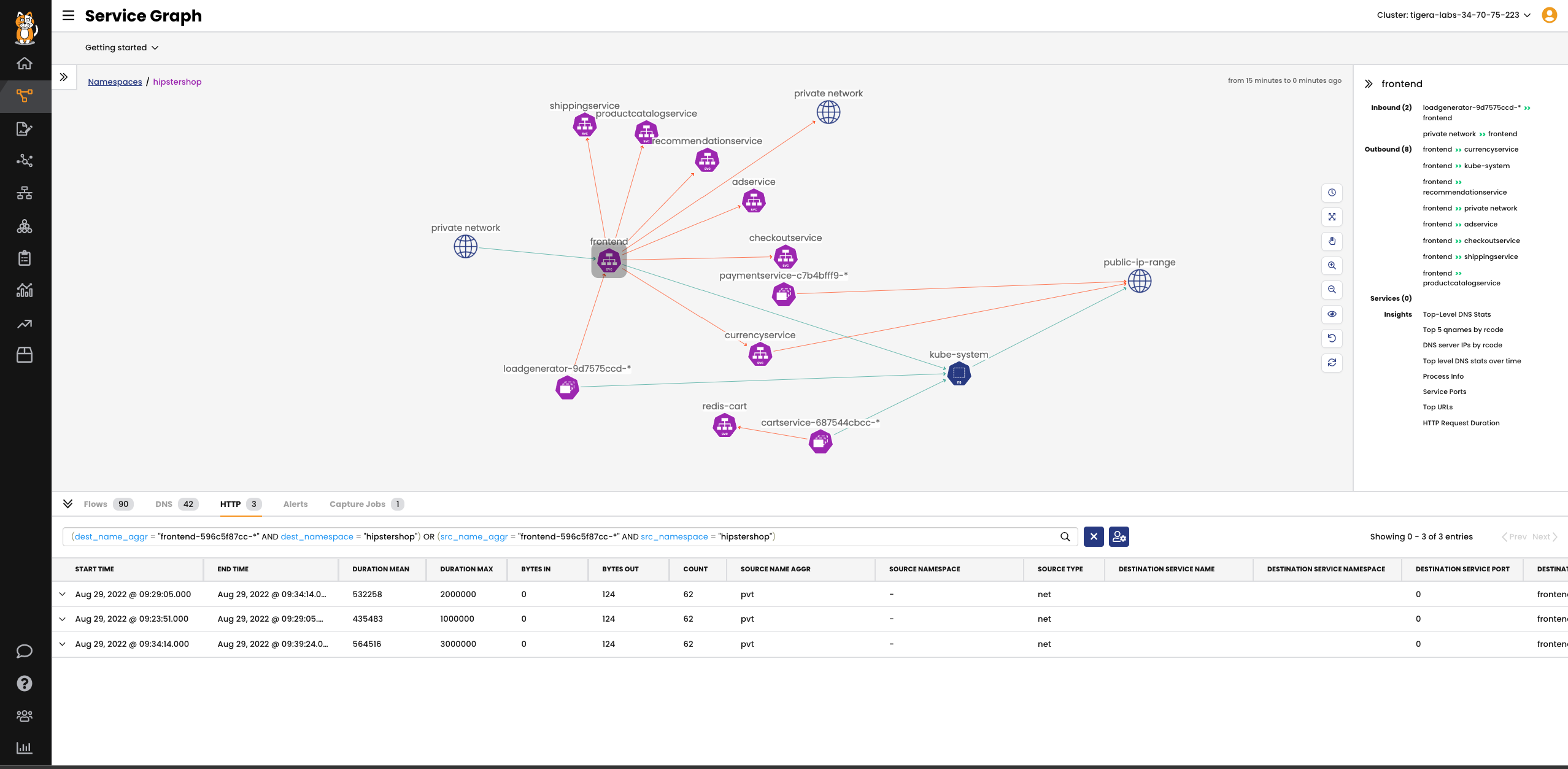
Source: Tigera
2. Linkerd

Linkerd is a lightweight, open source service mesh for Kubernetes environments. It improves the security, reliability, and observability of service-to-service communication by automatically injecting minimal, high-performance proxies into application pods. These proxies handle all inbound and outbound traffic, enabling telemetry, load balancing, and mutual TLS.
License: Apache-2.0
Repo: https://github.com/linkerd/linkerd2
GitHub stars: 10K+
Contributors: 300+
Key features include:
- Automatic mTLS: Provides encryption and service identity verification for communication between meshed workloads.
- Observability and metrics: Automatically collects metrics like request volume, success rates, and latency, with built-in CLI tools and dashboards.
- Load balancing and traffic routing: Supports dynamic traffic routing and balances requests across endpoints for HTTP, HTTP/2, and gRPC protocols.
- Retries, timeouts, and fault injection: Enables resilience through configurable retries and timeouts, along with tools to inject failures for testing system behavior under stress.
- Protocol support: Transparently proxies HTTP, HTTP/2, gRPC, and TCP traffic, including WebSockets and TLS connections.
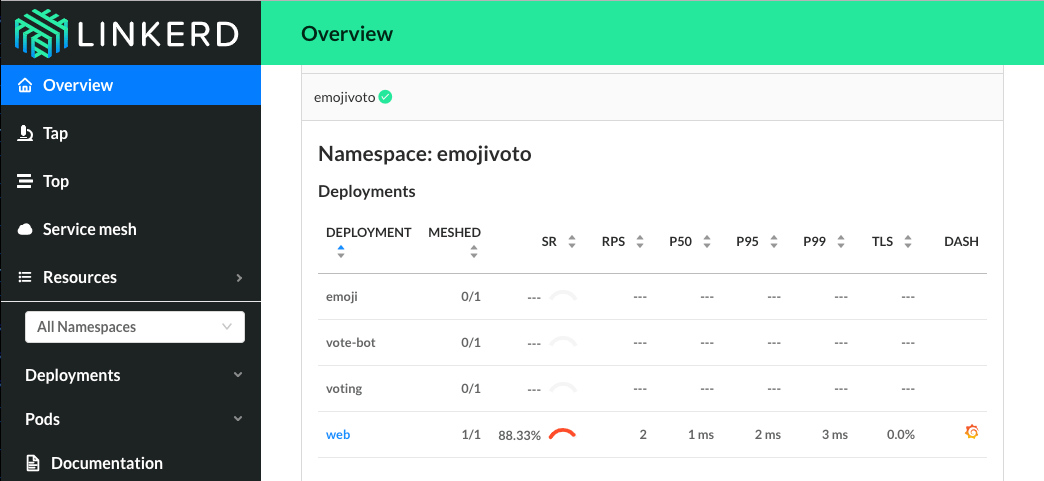
Source: Linkerd
3. Consul

Consul is a multi-platform service mesh and service discovery tool developed by HashiCorp, designed to connect and secure services across any infrastructure. It enables identity-based networking by using service identities instead of traditional IP-based approaches, allowing communication between services running in Kubernetes, VMs, or across hybrid environments.
License: Business Source License 1.1
Repo: https://github.com/hashicorp/consul
GitHub stars: 28K+
Contributors: 900+
Key features include:
- Service discovery: Maintains a service registry accessible via DNS or HTTP.
- Secure networking with mTLS: Authenticates and encrypts service-to-service communication using mutual TLS.
- L7 traffic management: Supports traffic policies for routing, traffic splitting, and failure handling across services in the mesh.
- Access control and API gateway: Enforces policies that control which services or users can access applications.
- Multi-platform support: Runs across Kubernetes, Nomad, and virtual machines.
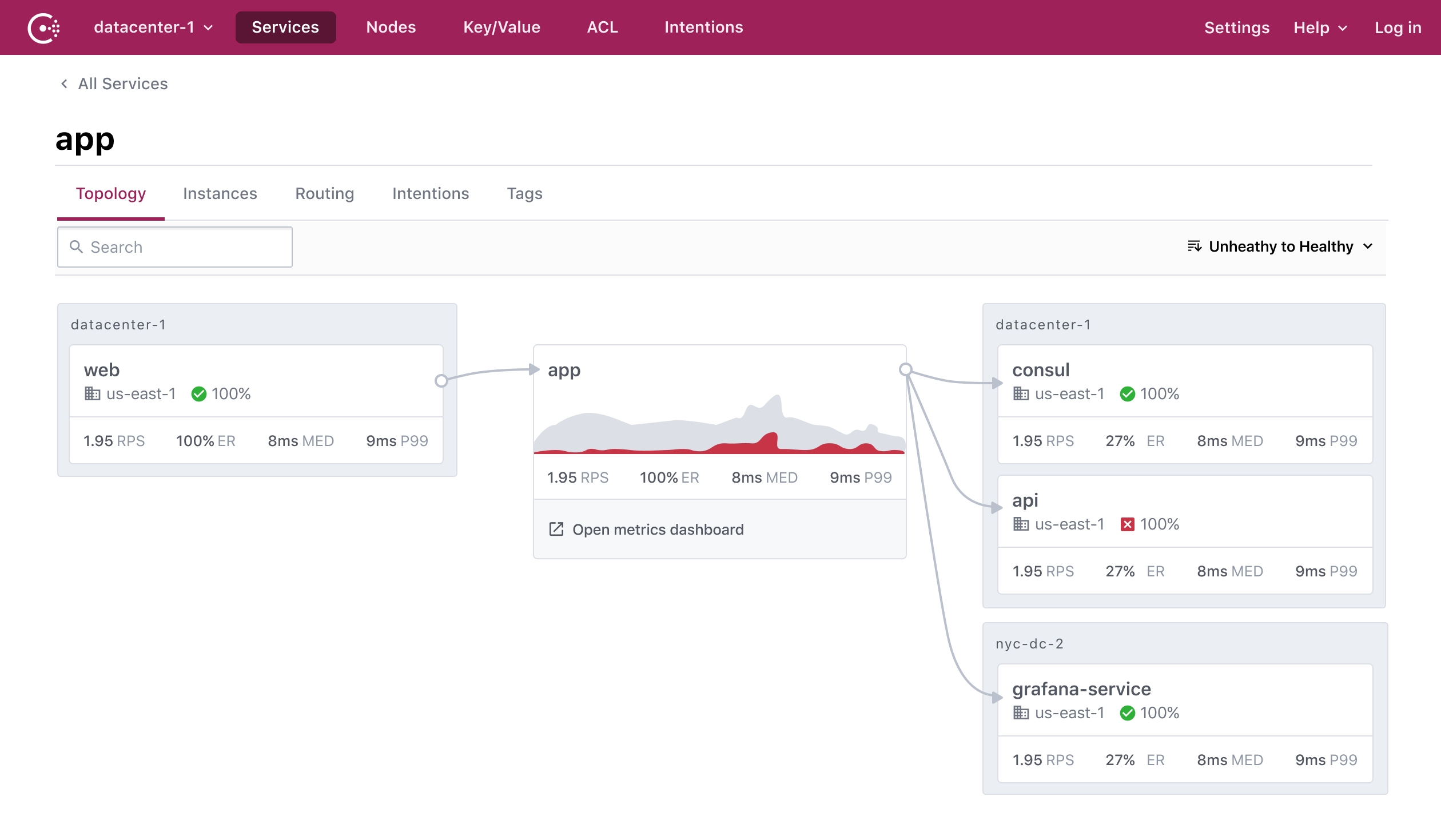
Source: HashiCorp
4. Traefik Mesh

Traefik Mesh is a lightweight service mesh for Kubernetes environments. Built on top of the Traefik Proxy, it focuses on simplicity, quick deployment, and integration without the operational overhead of sidecar proxies or complex configuration.
License: Apache-2/0
Repo: https://github.com/traefik/mesh
GitHub stars: 2K+
Contributors: 30+
Key features include:
- Non-invasive architecture: Operates without using sidecar containers or pod injection.
- Quick installation: Deployable with a single command.
- Open source and opt-in: Community-driven and open source, avoiding vendor lock-in and allowing teams to adopt it incrementally.
- Observability and monitoring: Includes OpenTracing support and is pre-integrated with Prometheus and Grafana for out-of-the-box metrics and visualization.
- Traffic management: Supports features like load balancing (including canary deployments), retries, failovers, circuit breakers, and rate limiting.
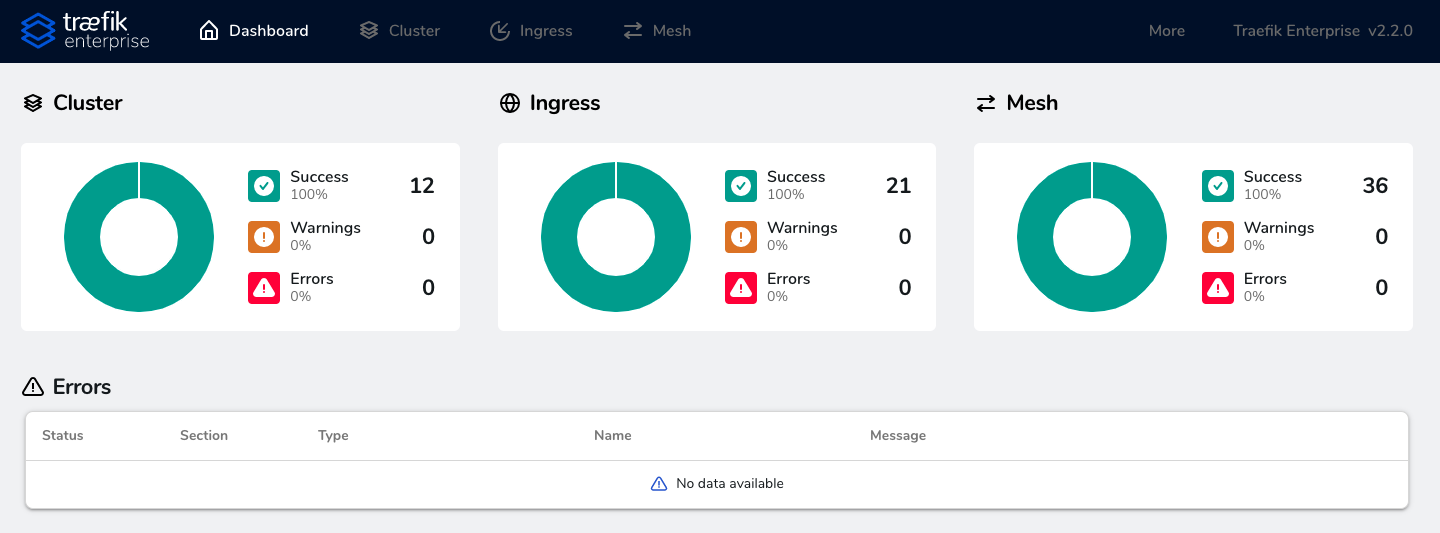
Source: Traefik Mesh
5. Istio

Istio is an open source service mesh that provides a set of tools to manage, secure, and observe microservice communications in distributed systems. It operates as an infrastructure layer that works across Kubernetes clusters, virtual machines, and hybrid environments. It is built on the Envoy proxy and developed by Google, IBM, and Lyft.
License: Apache-2.0
Repo: https://github.com/istio/istio
GitHub stars: 36K+
Contributors: 1K+
Key features include:
- Zero trust security by default: Uses mutual TLS to encrypt traffic and authenticate service identities.
- Observability: Generates telemetry data across the mesh, integrating with tools like Prometheus and Grafana to monitor service behavior and troubleshoot issues.
- Traffic management: Supports A/B testing, canary deployments, and traffic splitting using routing rules based on service versions, headers, and other attributes.
- Multiple deployment modes: Offers both traditional sidecar proxy mode and the new ambient mode for simplified operations and reduced overhead.
- Envoy-based architecture: Built on Envoy, enabling extensibility via WebAssembly and integration with external policy and telemetry systems.
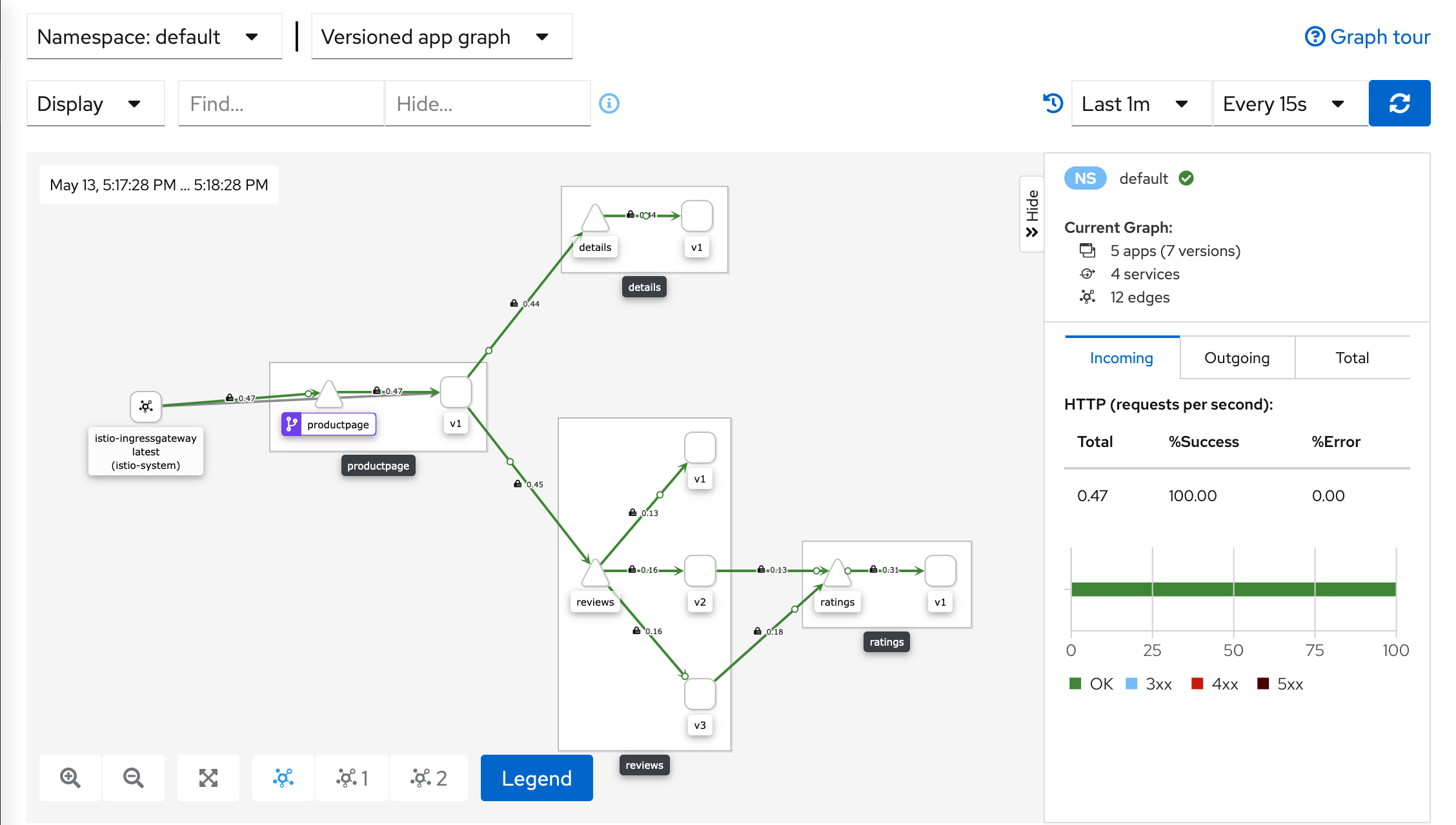
Source: Istio
6. AWS App Mesh

AWS App Mesh is a managed service mesh that provides application-level networking to manage communication between microservices across AWS environments. It enables visibility, traffic control, and secure service-to-service communication without requiring changes to application code.
License: Commercial
Key features include:
- Envoy-based proxy architecture: Uses Envoy as a sidecar proxy for each service, managing all incoming and outgoing traffic without modifying application code.
- Traffic routing and control: Supports dynamic traffic routing and client-side load balancing, allowing control over request flows, version rollouts, and failure handling.
- Service discovery and health checks: Automatically registers services and updates proxy configurations based on health status.
- Mutual TLS for authentication: Provides mTLS-based service-to-service authentication using certificates issued by AWS Certificate Manager Private CA or customer-managed CAs.
- Integrated observability: Natively integrates with AWS CloudWatch and AWS X-Ray for metrics, logs, and distributed tracing, and supports external tools like Datadog, Sysdig, and Prometheus.
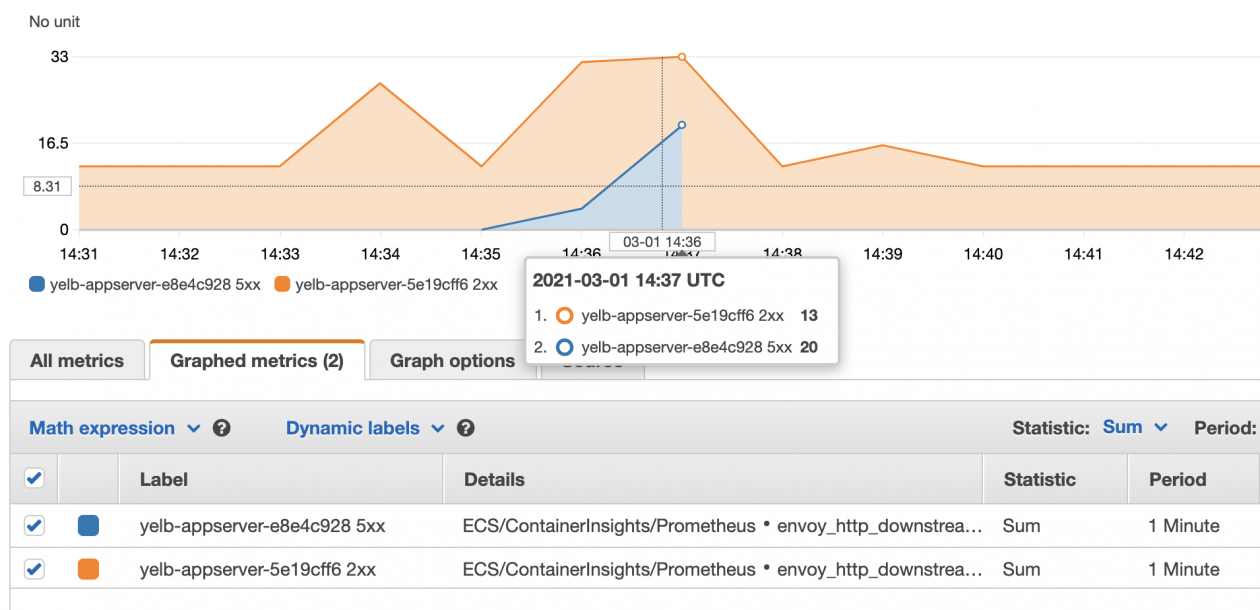
Source: Amazon
7. Open Service Mesh

Open Service Mesh (OSM) is a lightweight, extensible service mesh for Kubernetes environments, designed to simplify the management of microservice communication. Backed by the Cloud Native Computing Foundation and built on top of the Envoy proxy, OSM implements the Service Mesh Interface (SMI) specification to ensure a standard API experience.
License: Apache-2.0
Repo: https://github.com/openservicemesh/osm
GitHub stars: 2K+
Contributors: 80+
Key features include:
- SMI-based configuration: Uses the SMI APIs for configuring traffic policies, access control, and telemetry.
- Sidecar proxy architecture: Injects Envoy as a sidecar container next to application instances, providing isolation for traffic management and policy enforcement.
- Secure communication with mTLS: Enables encryption and service identity verification via mutual TLS.
- Traffic shifting and routing: Supports traffic shifting to enable safe deployments such as canary releases and blue/green strategies.
- Access control: Allows traffic policies to define which services can communicate, supporting zero trust security models.
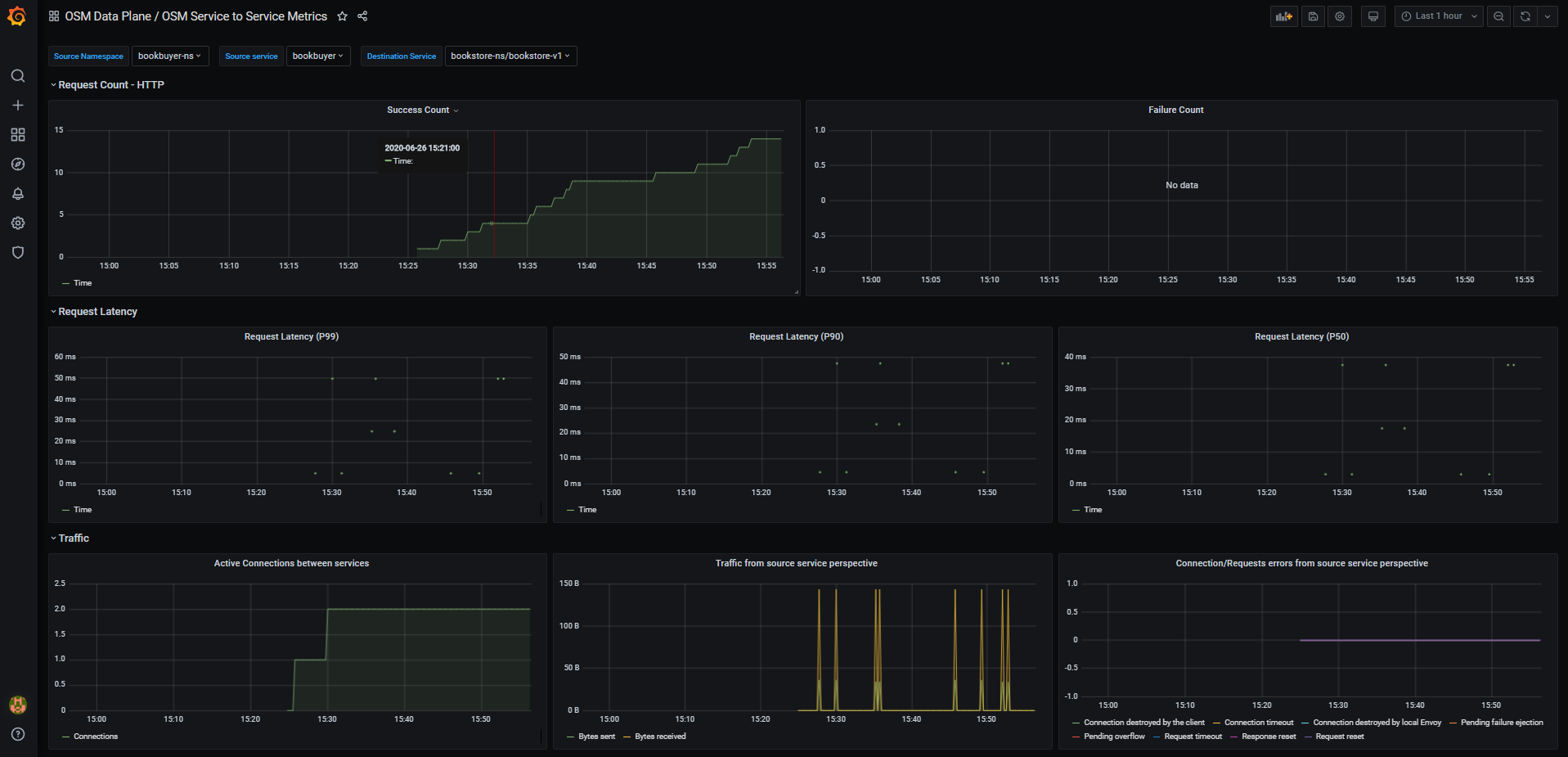
Source: Open Service Mesh
8. Kuma

Kuma is an open source, universal service mesh built on top of the Envoy proxy, intended to manage secure and reliable service connectivity across Kubernetes, virtual machines, and hybrid environments. It offers out-of-the-box policies for traffic control, security, and observability, and provides native support for multi-mesh and multi-zone deployments.
License: Apache-2.0
Repo: https://github.com/kumahq/kuma
GitHub stars: 3K+
Contributors: 100+
Key features include:
- Platform support: Works across Kubernetes, VMs, and hybrid environments.
- Envoy proxy integration: Ships with Envoy pre-configured, enabling L4/L7 traffic management.
- Multi-zone and multi-cluster connectivity: Natively supports multi-zone and multi-cluster communication, enabling service mesh across cloud, on-premises, and hybrid deployments.
- Out-of-the-box policies: Provides ready-to-use policies for routing, retries, timeouts, circuit breakers, mTLS, access control, and traffic tracing for L4 and L7 traffic.
- Multi-mesh architecture: Allows a Kuma control plane to manage multiple meshes.
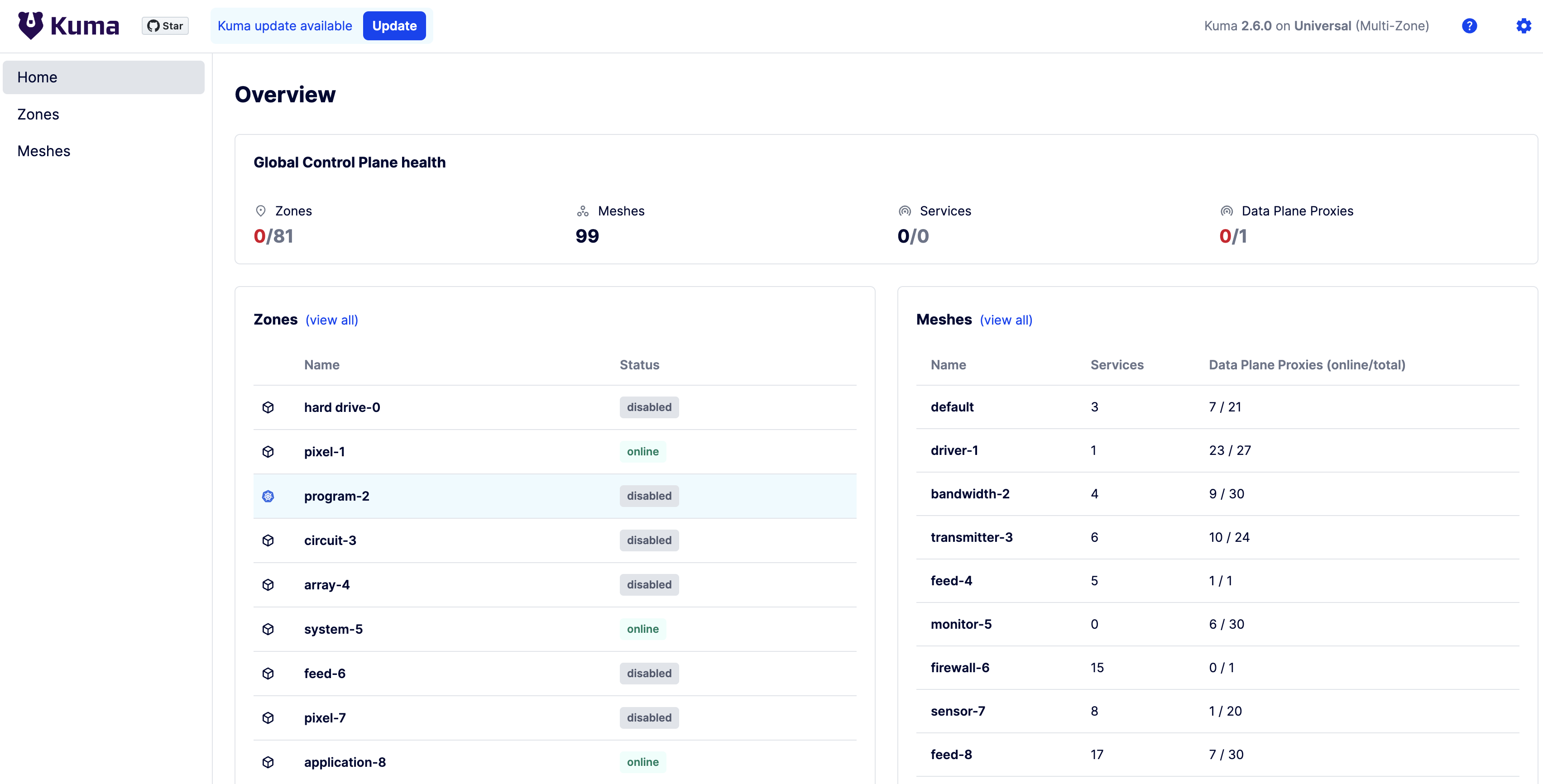
Source: Kuma
How to Choose Service Mesh Solutions
Selecting the right service mesh depends on infrastructure, team capabilities, and operational needs. Service meshes vary widely in complexity, features, and compatibility with existing systems. Here are key considerations to guide your evaluation:
- Platform compatibility: Ensure the service mesh supports existing infrastructure—whether Kubernetes, virtual machines, or hybrid environments. Some service meshes are Kubernetes-native, while others support broader deployment scenarios.
- Operational overhead: Assess the complexity of installation, configuration, and maintenance. Lightweight meshes are easier to adopt with fewer components, while full-featured solutions may require more resources and expertise.
- Security requirements: Consider the depth of built-in security features. Look for support for mutual TLS, fine-grained access control, and external identity integration. For zero trust environments, thorough policy enforcement is essential.
- Traffic management needs: If advanced routing, canary deployments, or blue/green releases are important, prioritize meshes with flexible traffic control.
- Observability and telemetry integration: Prefer a mesh that integrates with the monitoring stack (e.g., Prometheus, Grafana, Datadog). Native support for distributed tracing and metrics collection is key for debugging and performance tuning.
- Community and ecosystem support: Active development, strong documentation, and community engagement can significantly impact adoption and troubleshooting. Evaluate the maturity of the project and its ecosystem.
- Vendor lock-in and extensibility: Opt for open source or standards-based meshes (e.g., those using SMI) if vendor neutrality and future extensibility are priorities.
- Multi-tenancy and scalability: For large organizations or multi-team environments, look for support for multi-mesh or multi-zone deployments, policy isolation, and control plane scalability.