








What Is Microsegmentation Software?
Microsegmentation software is a network security solution designed to isolate workloads and applications within a broader network. By dividing networks into smaller segments, it limits the attack surface, making unauthorized access or lateral movement within the network significantly harder.
Unlike traditional perimeter-based security, microsegmentation operates on applying security policies at a granular level, such as individual applications or workloads. The primary goal of microsegmentation software is to improve security through fine-grained control. This software uses identity-based criteria, such as applications, users, data, or devices, to enforce policies.
By assigning security rules to each segment, organizations can minimize risks, detect threats faster, and simplify compliance with industry regulations. Organizations increasingly embrace this solution due to its adaptability across on-premises, cloud-based, or hybrid environments.
In this article:
Key Features of Microsegmentation Software
Granular Policy Enforcement
Granular policy enforcement allows organizations to define security rules for individual applications, workloads, or devices. By using identity-based parameters and context-aware insights, microsegmentation ensures that only authorized traffic can access designated areas of the network. This limits lateral movement during cyberattacks and isolates threats.
Policies can target communication between workloads or regulate access within multi-cloud or on-premise environments. For example, if a malicious actor breaches an endpoint, granular enforcement ensures the attacker is restricted to that compromised segment. This limits their ability to infiltrate the rest of the network.
Comprehensive Visibility and Monitoring
Microsegmentation solutions provide deep visibility into network traffic and application flows. This visibility ensures that administrators can monitor interactions across workloads, devices, and users in real time. By capturing and analyzing this data, organizations gain insights into network behavior, enabling them to detect abnormal traffic patterns or vulnerabilities instantly.
In addition to traffic analysis, comprehensive monitoring supports the mitigation of advanced threats. Through correlation and anomaly detection, admins can take proactive measures to prevent breaches and maintain operational integrity. This feature ensures a better understanding of an organization’s security posture.
Deployment Flexibility
Microsegmentation software aids in offering deployment flexibility. It can integrate into diverse environments—on-premise, cloud-native, or hybrid setups—without requiring substantial infrastructure changes. This versatility allows it to suit modern data centers and cloud architecture while scaling alongside business requirements without performance degradation.
In cloud-native deployments, microsegmentation is often a foundational layer of container security, enforcing workload-level policies that complement runtime and image-based protections.
Organizations can also deploy these solutions through agent-based or agentless methods, depending on their goals. With agent-based methods, individual workloads have dedicated resources for policies, while agentless options ensure faster implementation. Both methods minimize disruptions, offering security that adapts to an enterprise’s network composition.
Scalability and Performance
Effective microsegmentation software can scale alongside organizational growth. As enterprises expand operations or onboard additional cloud environments, the software adapts to manage increased traffic volumes without compromising performance. This scalability is critical in sustaining security in dynamic infrastructures, especially with constant workload changes.
High-performance solutions ensure minimal latency during policy enforcement, maintaining uninterrupted workflow. With the rise of global operations and remote work, scalability and reliable performance are essential.
Compliance and Reporting
Compliance with regulatory standards like GDPR, HIPAA, or PCI DSS is easier with microsegmentation tools. These solutions provide automated reporting and audit-ready logs to demonstrate adherence to security protocols. Comprehensive reporting enables real-time tracking of policy enforcement, ensuring that security practices align with required frameworks.
Purpose-built microsegmentation solutions also simplify keeping compliance during audits. Organizations can generate dashboards that present critical metrics or historical event logs without manual intervention, reducing overhead for compliance teams. This simplified approach ensures frameworks are met efficiently while lowering the risk of regulatory penalties.
Notable Microsegmentation Software Solutions
1. Calico by Tigera

Calico is a network security and observability platform designed for securing workloads across containers, virtual machines, and bare metal. It provides dynamic network security policies to prevent unauthorized access and lateral movement.
Key features include:
- Dynamic segmentation: Uses workload metadata to enforce segmentation policies automatically, ensuring consistent security as workloads scale.
- Policy enforcement: Supports microsegmentation with fine-grained policy controls at the workload level. Policies can be staged, previewed, and modified before deployment.
- Visibility: Provides detailed insights into network activity and policy impact, enabling security teams to optimize segmentation strategies.
- Scalability: Designed for high-performance enforcement across large-scale cloud and hybrid environments without centralized bottlenecks.
- Automated policy recommendations: Analyzes workload behavior and suggests security policies, reducing manual effort and simplifying microsegmentation adoption.
- Supports container, VM, and bare metal: Ensures consistent security policy enforcement across diverse environments, including containers, virtual machines, and physical servers.
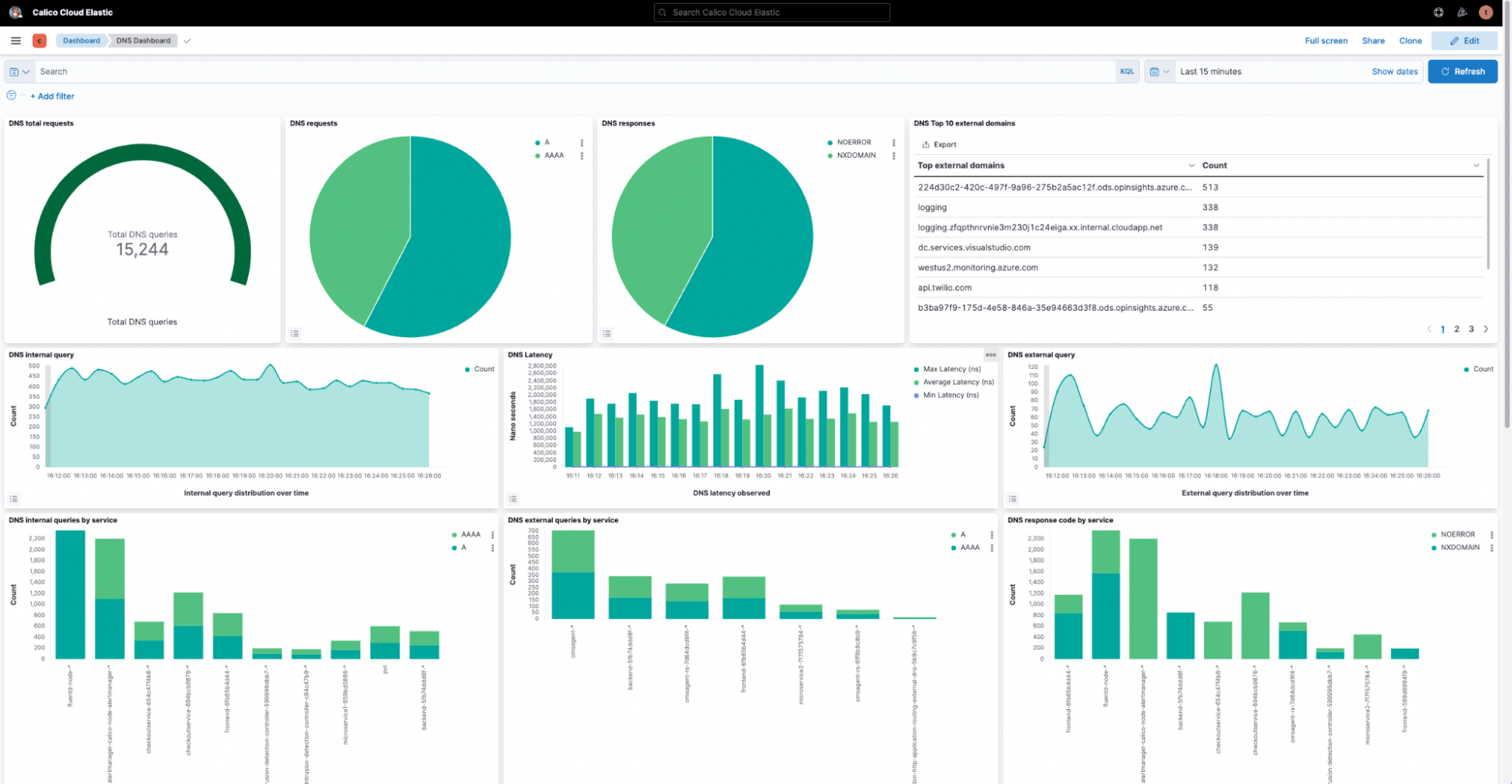
Source: Tigera
2. Cisco Secure Workload

Cisco Secure Workload is a microsegmentation solution to enforce zero trust security across application workloads in cloud, on-premises, or hybrid environments. It combines visibility, automation, and policy enforcement to prevent the lateral spread of threats and reduce the attack surface.
Key features include:
- Zero trust microsegmentation: Enforces security policies across workloads and environments, enabling zero trust by default.
- Visibility and automation: Provides insights into workload interactions and automates policy recommendations to simplify security operations.
- Threat response: Supports near real-time alerts, forensic capabilities, and automated actions to close security gaps.
- Deployment options: Available as SaaS or on-premises, supporting cloud, multicloud, and on-site data centers.
- Cloud migration support: Enables secure transitions to cloud infrastructures while meeting compliance needs such as European data residency requirements.
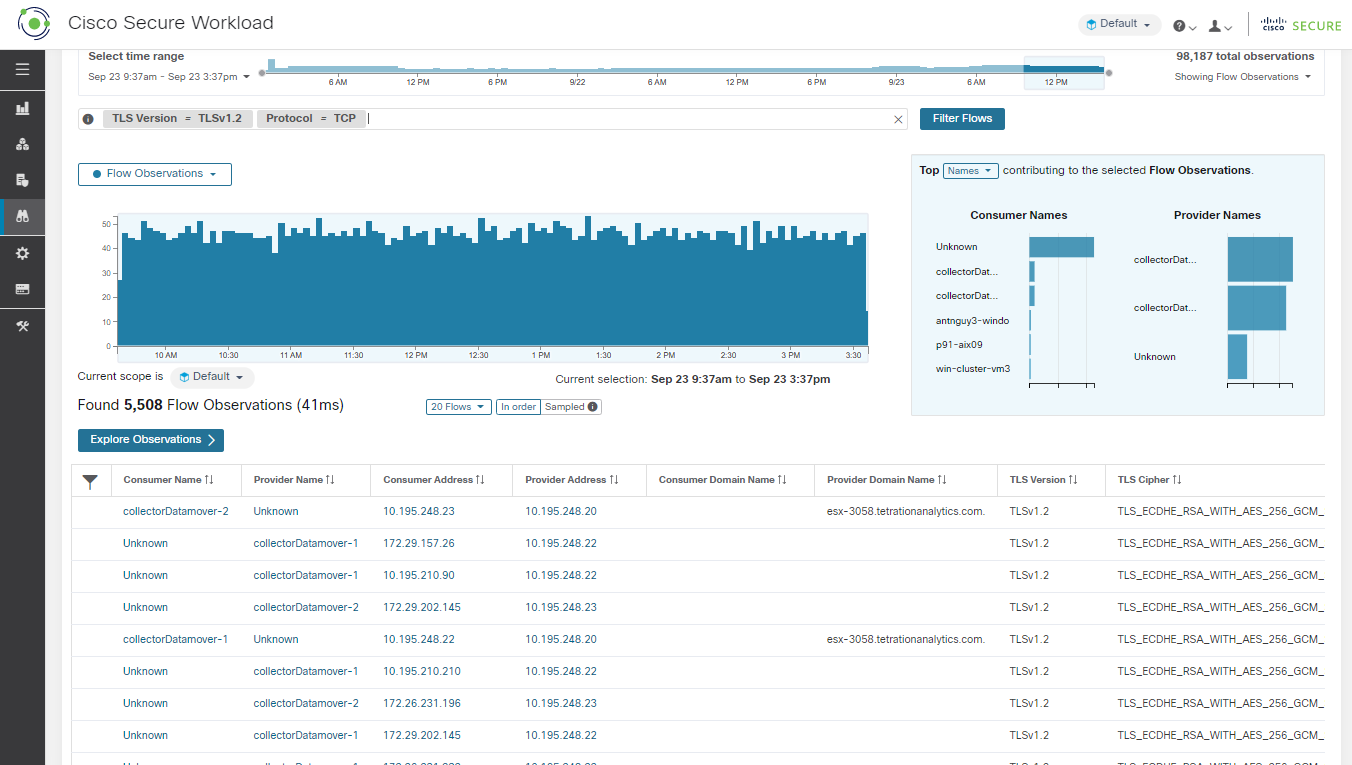
Source: Cisco
3. Illumio Core

Illumio Core supports microsegmentation for hybrid and multi-cloud environments, helping organizations enforce zero trust by preventing lateral movement across workloads, endpoints, and data centers. It combines telemetry data and AI-driven insights to recommend policies that contain threats before they spread.
Key features include:
- AI-driven policy recommendations: Uses telemetry and artificial intelligence to suggest segmentation policies.
- Universal environment support: Provides segmentation across data centers, cloud platforms, endpoints, and containers.
- Zero trust enforcement: Implements least-privilege access policies to remove implicit trust and reduce exposure within and across environments.
- Breach containment: Segments workloads, devices, and endpoints to isolate incidents—limiting threats to a single machine or workload.
- Cloud visibility and control: Visualizes cloud traffic, resource relationships, and metadata.

Source: Illumio
4. VMware NSX

VMware NSX offers microsegmentation as part of a broader network virtualization platform within VMware Cloud Foundation. It enables organizations to build software-defined networks that support security across hybrid and multi-cloud environments.
Key features include:
- Network virtualization (L2–L7): Offers a software-defined network stack, including routing, firewalling, load balancing, and segmentation.
- Self-service virtual private clouds (VPCs): Supports multi-tenancy and policy inheritance, enabling developers to manage network segments securely.
- Multi-site consistency: Provides unified control across multiple environments with centralized policy enforcement and state synchronization across sites.
- Declarative automation with APIs: Simplifies network provisioning and management using intent-based declarative APIs for faster service delivery.
- Monitoring and troubleshooting: Centralized dashboards provide real-time traffic insights, performance metrics, and alerting, enabling quick diagnosis and resolution of network issues.

Source: VMware
5. Akamai Guardicore Segmentation

Akamai Guardicore Segmentation offers a software-based microsegmentation platform focused on stopping lateral movement and protecting critical IT assets. It maps network activity, supports rapid policy creation, and enforces granular controls across hybrid, multi-cloud, and legacy environments.
Key features include:
- Layer 7 segmentation: Segments traffic at the process and service level, offering control over communication paths to protect against ransomware and lateral movement.
- Real-time and historical visibility: Provides insights into live and past network activity for breach detection, incident response, and forensic investigation.
- Infrastructure-agnostic enforcement: Decouples security policy enforcement from physical infrastructure.
- Visual mapping of network activity: Uses sensors and logs to create a unified visual representation of assets and communication flows, simplifying risk analysis.
- Policy creation: Offers tools and prebuilt templates to define segmentation rules, enabling secure deployment.
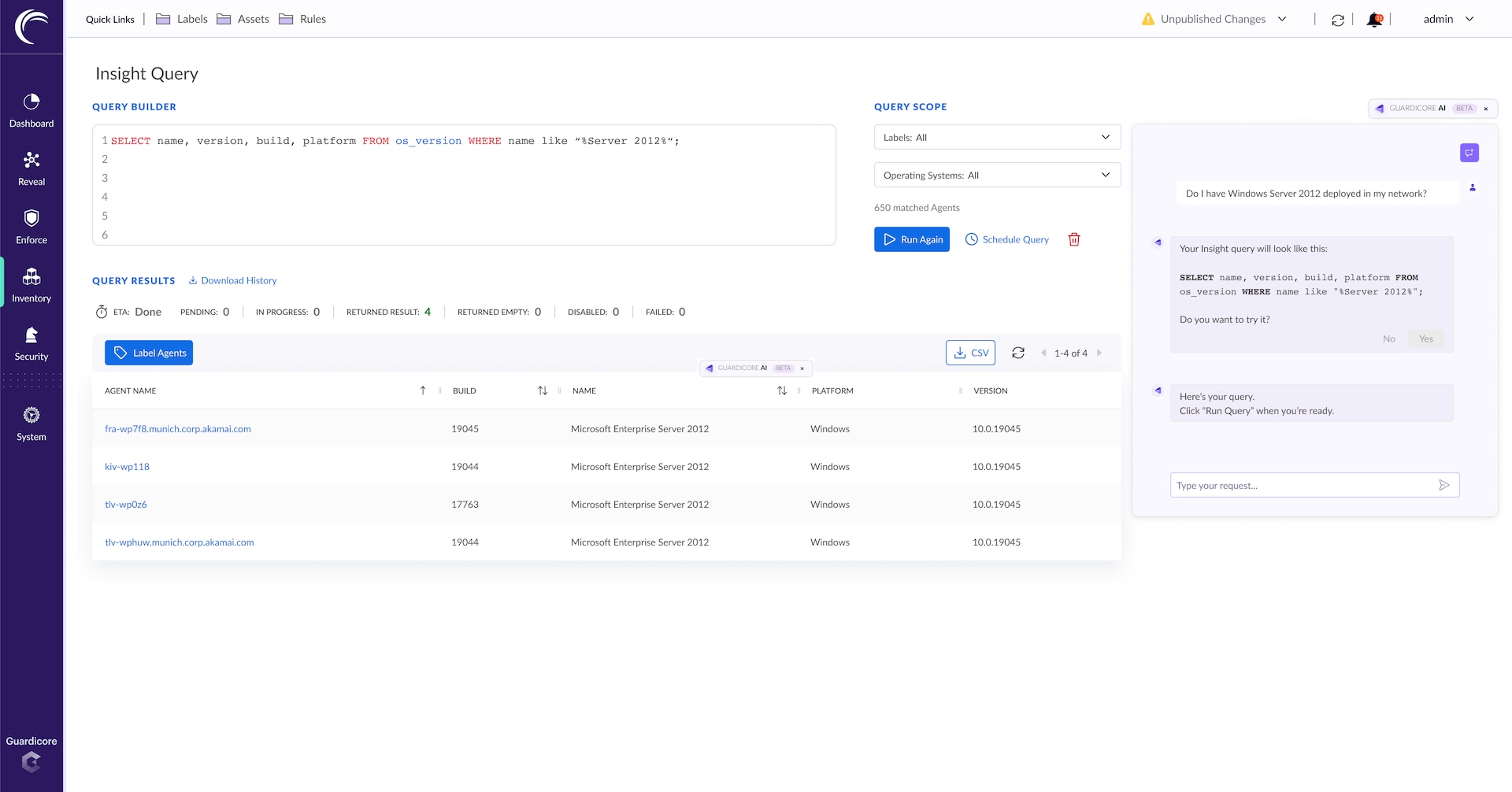
Source: Akamai
6. ColorTokens Xshield

ColorTokens Xshield is a microsegmentation platform that creates micro-perimeters around network assets to prevent the lateral spread of malware and ransomware. It provides a risk-based approach to zero trust, helping organizations reduce exposure quickly and refine security over time.
Key features include:
- Guided workflows and policy templates: Speeds up policy creation with templates and auto-recommendations based on traffic analysis and heuristics.
- Visual policy design: Offers a global network map with multi-dimensional filters to define and manage approved and denied communication flows.
- Continuous risk reduction: Starts with broad enterprise-wide controls and evolves to fine-grained, application-specific policies.
- Non-disruptive policy simulation: Enables pre-deployment testing of segmentation policies on devices, minimizing risk of service disruption during implementation.
- Auto-tagging and template consistency: Uses rule-based tagging and policy templates to simplify onboarding of new assets.
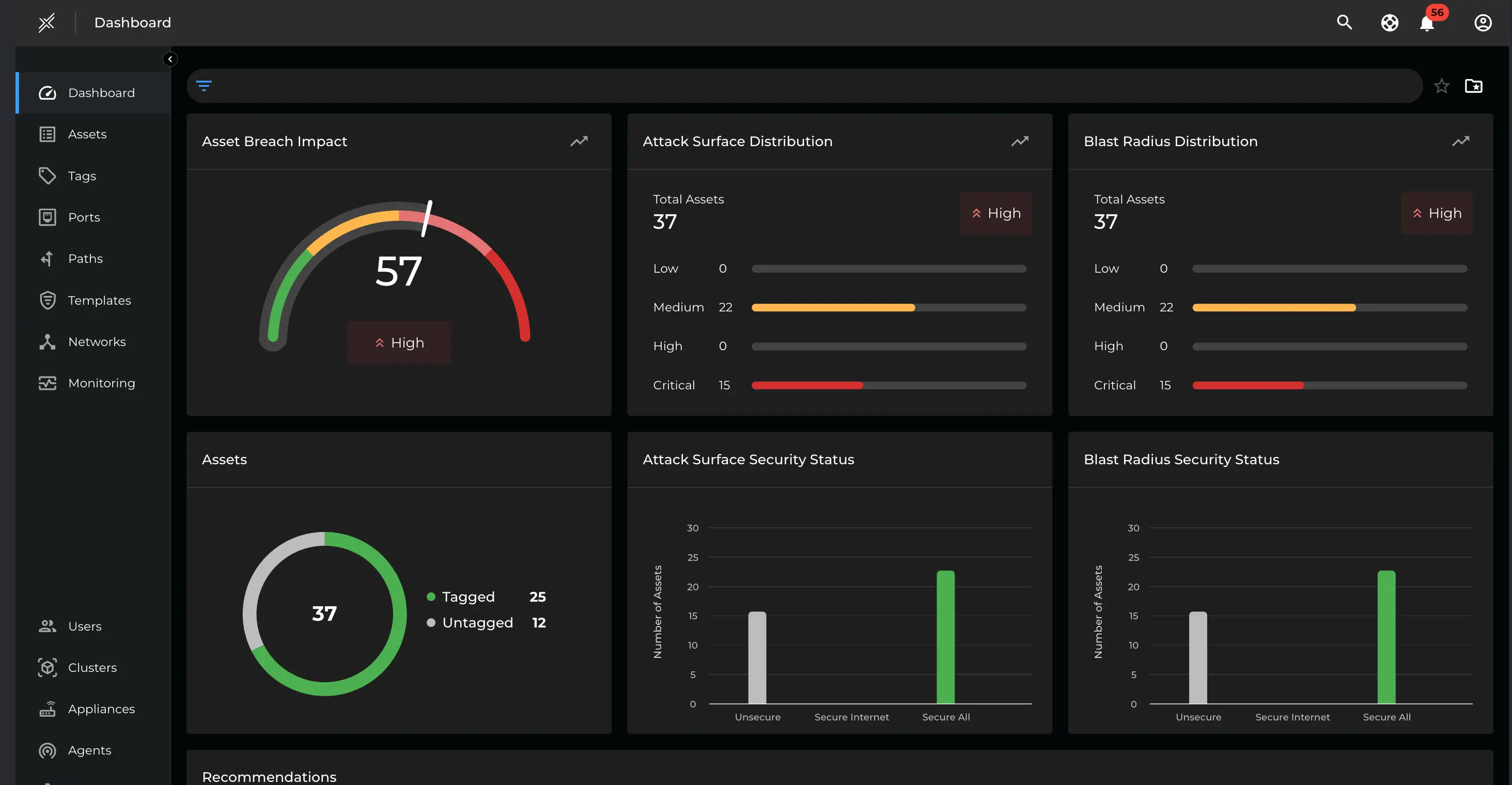
Source: ColorTokens
7. TrueFort

TrueFort provides microsegmentation for data centers and cloud environments, leveraging existing security agents like CrowdStrike and SentinelOne. It isolates workloads, limits lateral movement, and proactively stops ransomware and service account abuse.
Key features include:
- Behavior-based microsegmentation: Enforces segmentation based on live application behavior, isolating workloads and limiting traffic to only what is necessary at runtime.
- Service account protection: Monitors and restricts service account activity to prevent privilege misuse.
- Runtime threat containment: Detects and blocks anomalous behavior, stopping threats before they reach critical assets.
- Workload and file hardening: Applies CIS benchmark-based hardening to workloads and monitors critical files for unauthorized changes.
- Kubernetes and container security: Controls intra-container traffic and continuously monitors container behavior to protect cloud-native environments.
8. Tufin

Tufin provides a policy-driven approach to microsegmentation, intended for hybrid-cloud environments and complex enterprise networks. It centralizes and automates the creation, enforcement, and auditing of network segmentation policies across firewalls, SDNs, SASE, and edge devices.
Key features include:
- Centralized policy management: Offers a unified interface to define and enforce segmentation across diverse environments, including traditional and next-gen firewalls, cloud networks, and edge devices.
- Automated compliance checks: Uses pre-defined regulatory templates (e.g., PCI DSS, GDPR, NIST) to automate compliance verification.
- Visual segmentation mapping: Provides graphical tools for defining, visualizing, and refining segmentation policies to align with security and regulatory objectives.
- Audit trail and reporting: Maintains a log of policy changes, violations, and remediation steps, improving transparency and reducing audit preparation time.
- Non-compliance detection and remediation: Alerts administrators to policy violations with built-in tools for managing exceptions, remediating issues, and documenting outcomes.
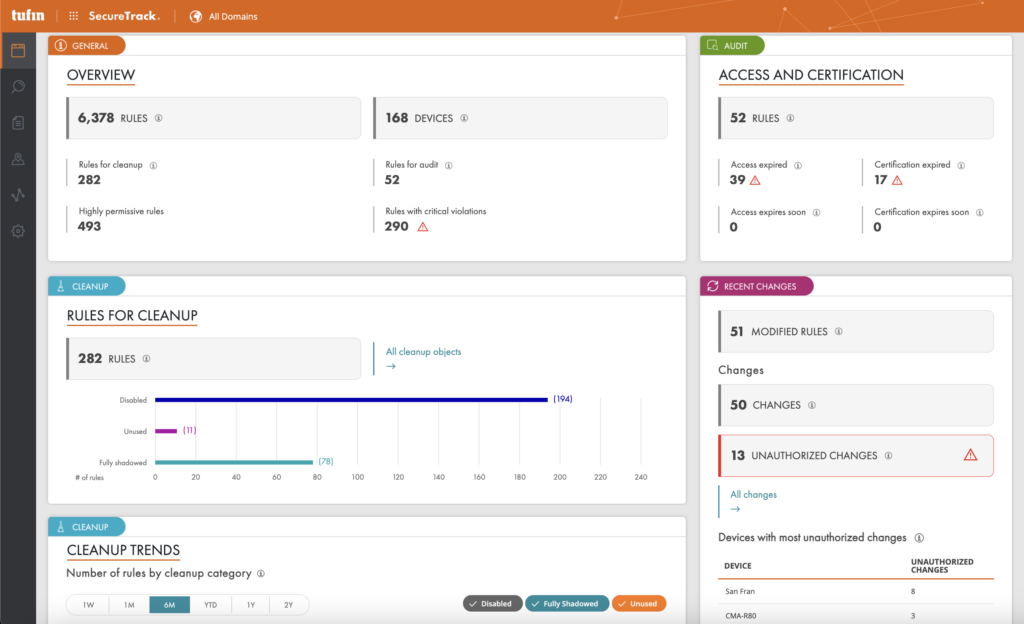
Source: Tufin
Conclusion
Microsegmentation software improves security by isolating network elements and enforcing strict access controls based on identity and behavior. By limiting communication to only what is necessary, it reduces the risk of lateral movement, speeds up threat detection, and supports compliance efforts. This fine-grained approach is essential for securing dynamic, multi-environment infrastructures and ensuring resilient network defenses.