







What Are Microsegmentation Tools?
microsegmentation tools improve network security by dividing a network into smaller, manageable segments. Unlike traditional segmentation that relies on physical barriers, microsegmentation allows organizations to enforce security policies within a logical boundary, making network management more adaptable and secure.
These tools help isolate and protect workloads within a network, ensuring that even if one part of the network is breached, the rest remains secure. The primary focus of microsegmentation tools is to minimize the attack surface within a network.
By creating smaller segments and defining strict access controls, these tools limit lateral movement for potential intruders. This is crucial in environments where sensitive data is handled, as microsegmentation ensures that data is only accessible to authorized users and applications.
Because many modern workloads run in Kubernetes, microsegmentation is closely tied to broader container security practices that protect images, runtimes, and inter-service traffic.
In this article:
Key Features of Microsegmentation Tools
Zero Trust Segmentation
Zero trust segmentation operates on the principle of never trusting but always verifying access requests, regardless of their origin. This ensures that each access request within the network undergoes strict verification before being granted. By applying this model, microsegmentation tools limit trusted access, reducing the risk of insider threats and lateral movement.
This approach requires continuous monitoring and verification of user, device, and data flows. It helps in maintaining tight security control without hindering legitimate user activities.
For a deeper look at how these principles combine in practice, see our guide on microsegmentation zero trust architectures.
Encryption and Secure Communication
Microsegmentation tools utilize encryption algorithms to protect data in transit, preventing interception or unauthorized access by malicious actors. By securing data flows, organizations can protect sensitive information, maintaining compliance with data protection regulations.
Additionally, microsegmentation tools enable secure communication between different segments, reducing vulnerabilities during data exchange. By encrypting communication channels, they provide an additional layer of defense against network-based attacks.
Organizations handling cardholder data should also review our guide on network segmentation for PCI DSS to align segmentation controls with regulatory requirements.
Granular Policy Enforcement
Granular policy enforcement allows organizations to establish security policies tailored to each network segment. This ensures that security rules can be applied at the application level, protecting processes from unwanted access.
These policies can dynamically adjust to changes in the network environment. For example, if an application changes its communication pattern, granular policies can accommodate it without sacrificing security.
Visibility and Monitoring
Visibility and monitoring capabilities are essential for identifying anomalies and potential threats in real time. Microsegmentation tools provide insights into network traffic, offering a clear view of communication patterns between workloads. This level of transparency helps security teams detect unauthorized access attempts or unexpected changes in traffic behavior promptly.
Monitoring tools can also capture detailed logs and analytics, which are invaluable during forensic investigations or compliance audits. Enhanced visibility ensures that organizations can not only react to potential threats but also anticipate and prevent them.
Multi-Environment Support
Multi-environment support ensures that microsegmentation tools can operate across diverse IT environments, including on-premises, cloud, and hybrid infrastructures. This enables consistent policy enforcement, maintaining a uniform security posture irrespective of the underlying infrastructure.
Organizations benefit from simplified management, as security policies can be unified and applied across different platforms without modification. By supporting multiple environments, these tools enable organizations to leverage the best technology solutions for their needs.
Related content: Read our guide to microsegmentation security
Notable Microsegmentation Tools
1. Calico

Calico is a network security and observability platform designed for securing workloads across containers, virtual machines, and bare metal. It provides dynamic network security policies to prevent unauthorized access and lateral movement.
Key features include:
- Dynamic segmentation: Uses workload metadata to enforce segmentation policies automatically, ensuring consistent security as workloads scale.
- Policy enforcement: Supports microsegmentation with fine-grained policy controls at the workload level. Policies can be staged, previewed, and modified before deployment.
- Visibility: Provides detailed insights into network activity and policy impact, enabling security teams to optimize segmentation strategies.
- Scalability: Designed for high-performance enforcement across large-scale cloud and hybrid environments without centralized bottlenecks.
- Automated policy recommendations: Analyzes workload behavior and suggests security policies, reducing manual effort and simplifying microsegmentation adoption.
- Supports container, VM, and bare metal: Ensures consistent security policy enforcement across diverse environments, including containers, virtual machines, and physical servers.
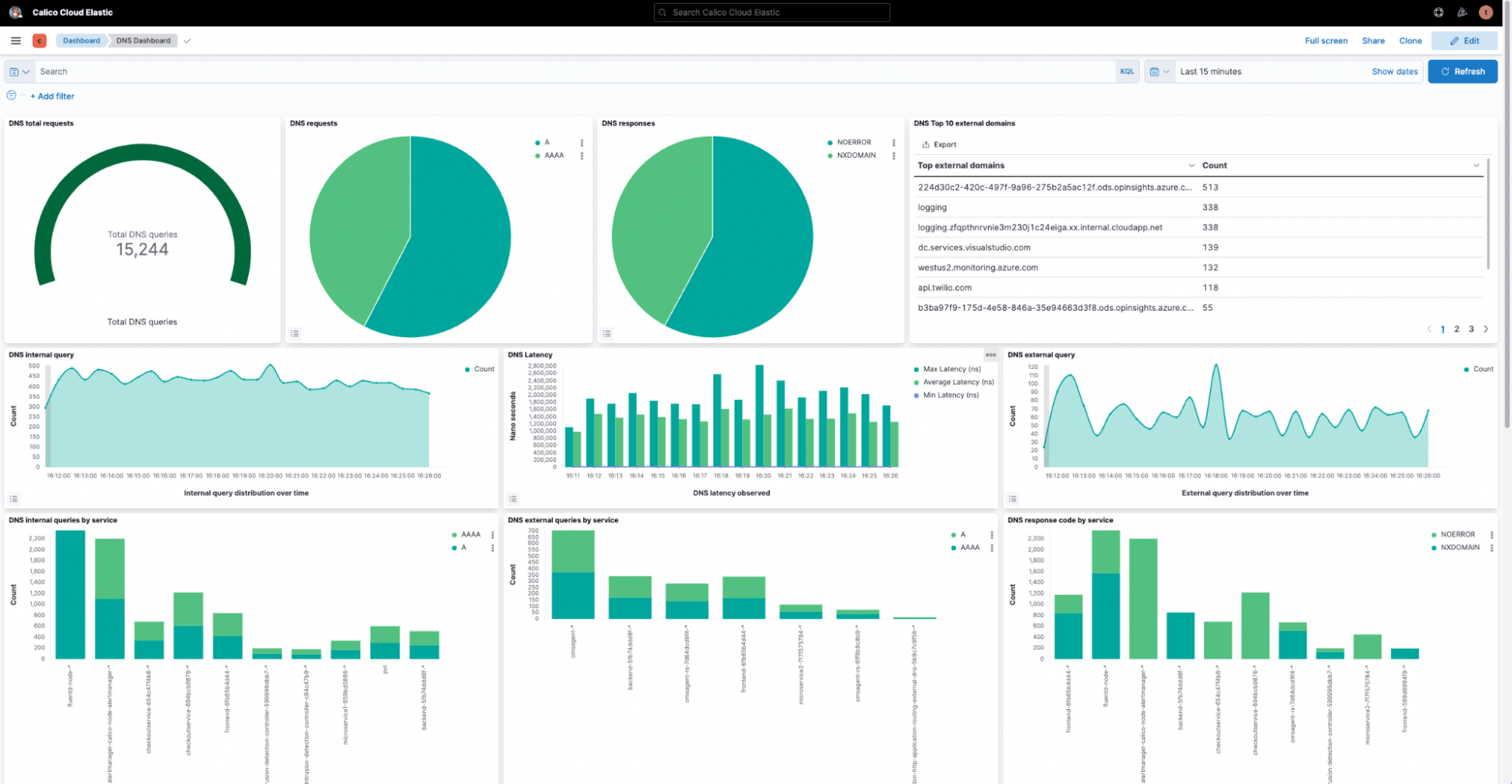
Source: Tigera
2. Illumio Core

Illumio Core is a microsegmentation platform to improve security in on-premises and cloud data centers. It provides organizations with tools to build a zero trust model, minimizing the risk of lateral movement and containing potential breaches.
Key features include:
- Traffic visibility: Offers an application dependency map, traffic flow telemetry, and historical records. These features provide actionable insights for analyzing and controlling traffic.
- Rapid response: Enables organizations to respond to breaches within minutes, reducing the spread of ransomware or other attacks.
- Intelligent policy creation: Identifies key services and suggests appropriate zero trust segmentation policies. This automated policy creation minimizes manual effort.
- Scalable segmentation: Can scale from hundreds to hundreds of thousands of workloads.
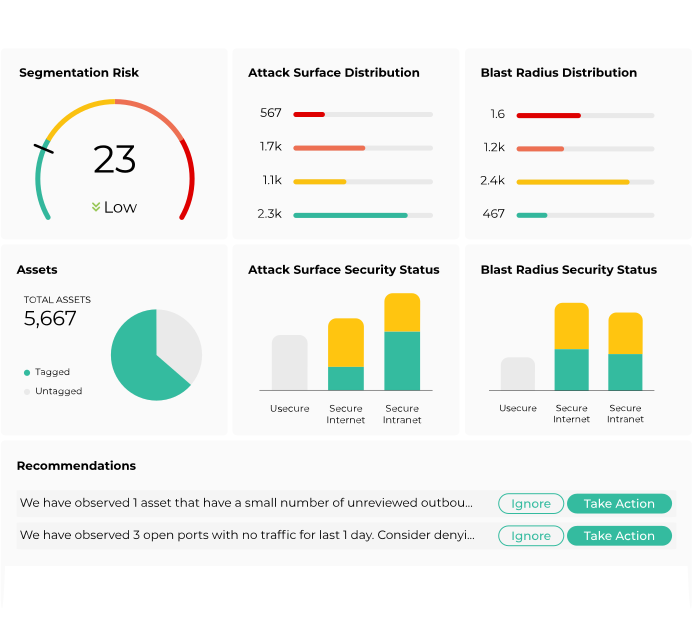
- Dashboards: Features dashboards with measurable risk reduction scores. Reports provide visibility into current risks and highlight the impact of implemented segmentation policies on ransomware resilience.

Source: Illumio
3. Cisco Secure Workload

Cisco Secure Workload is a microsegmentation solution for reducing the attack surface and protecting application workloads across diverse environments. It enforces microsegmentation policies for workloads on-premises, in the cloud, or in hybrid setups.
Key features include:
- Zero trust microsegmentation: Enforces zero trust policies across all application environments. This ensures that only authorized interactions between workloads are permitted.
- Visibility: Provides insights into workload interactions through detailed telemetry and analytics. Acts as a single source of truth, enabling security teams to monitor activity, identify vulnerabilities, and generate best-practice policy recommendations.
- Automation and policy enforcement: Automates policy creation and enforcement, ensuring consistent implementation of security controls at scale. Real-time alerts and forensic capabilities enable rapid responses to changes and emerging threats.
- Deployment options: Offers both software-as-a-service (SaaS) and on-premises deployment models. Organizations can choose the option that best aligns with their operational and compliance needs.
- Security resilience: Strengthens an organization’s security posture by minimizing risk and reducing the costs associated with downtime. Provides near real-time alerts and an auditable record of interactions to maintain transparency and compliance.
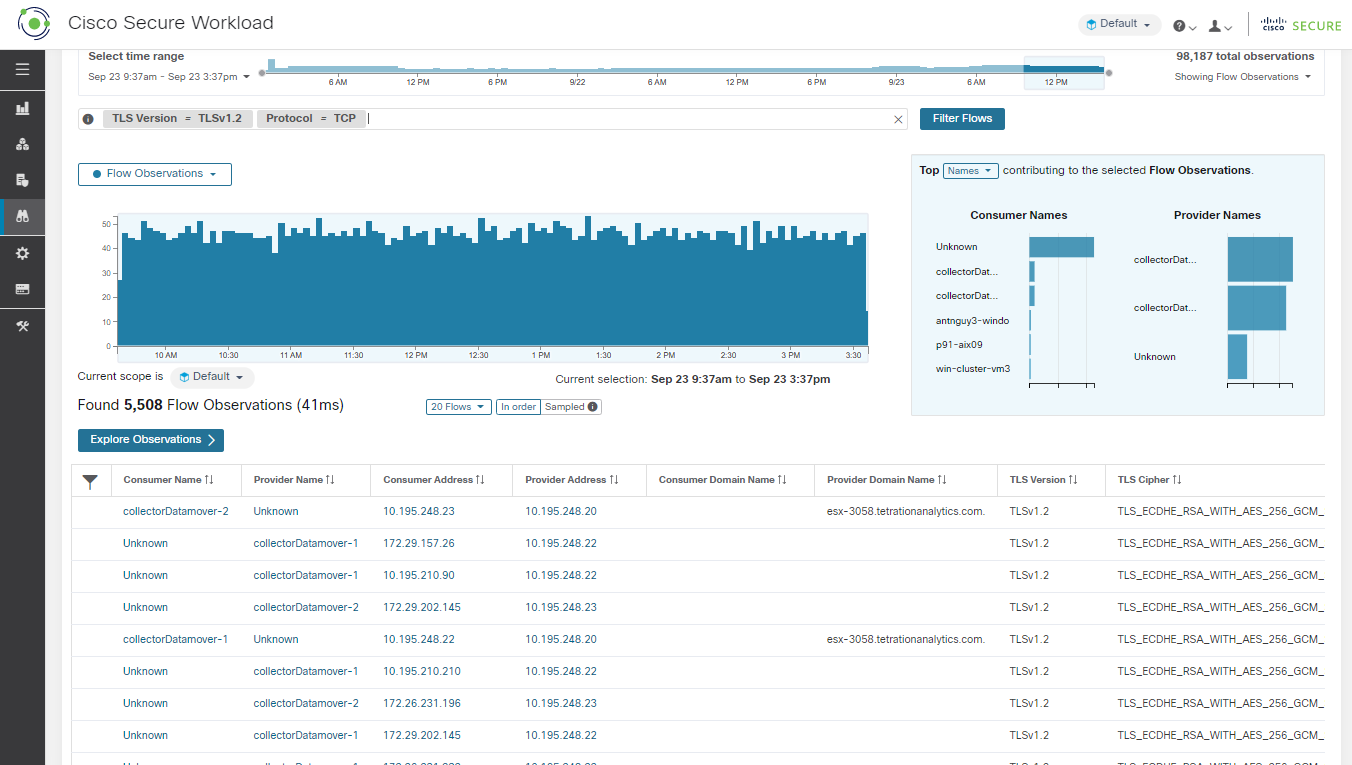
Source: Cisco
4. Akamai Guardicore Segmentation
Akamai Guardicore Segmentation is a software-based microsegmentation solution to reduce network risks, prevent lateral movement, and protect IT assets. By enabling granular control and visibility, it enables implementation of zero trust principles across data centers, multicloud environments, and endpoints.
Key features include:
- Granular microsegmentation: Allows organizations to enforce segmentation policies down to individual processes and services.
- Visibility: Provides near-real-time and historical views of network activity, offering detailed insights at the user and process level. These capabilities enable quick detection of breaches and simplify forensic investigations.
- Lateral movement prevention: Prevents malicious lateral movement by applying strict access controls and segmentation policies.
- Scalable deployment: The software-based approach eliminates the need for costly security hardware. The platform supports legacy systems and modern infrastructure.
- Simplified policy management: Offers pre-built templates, workflows, and intuitive tools to create, enforce, and modify security policies. Asset labeling integrates with orchestration systems and CMDBs.
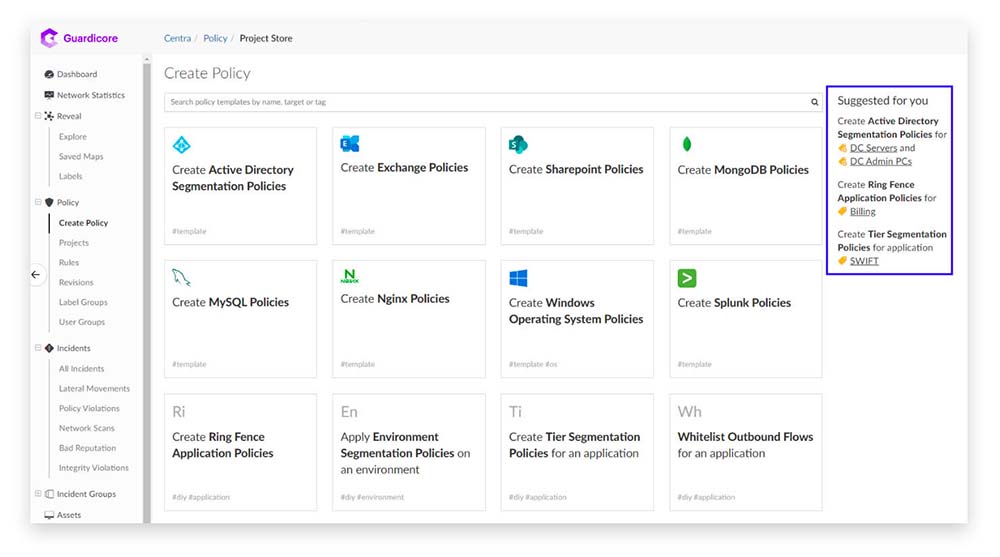
Source: Akamai
5. Zscaler Workload Segmentation

Zscaler Workload Segmentation is a cloud-based solution that secures multi-cloud and hybrid-cloud environments, eliminating the need for traditional firewalls. It enables workload segmentation to protect against lateral movement, reduce the attack surface, and ensure consistent security controls across cloud infrastructure.
Key features include:
- Zero trust cloud security: The Zero Trust Exchange platform inspects all traffic inline to provide protection against cyberthreats and data loss.
- Elimination of lateral movement: Prevents lateral threat movement by segmenting workloads within and across clouds, virtual private clouds, and virtual machines.
- Threat and data protection: Applies standardized security controls across multi-cloud environments, offering consistent protection for workload-to-internet, SaaS, and workload-to-workload traffic.
- Simplified operations and cost reduction: By removing the need for legacy components like firewalls, proxies, and dedicated interconnect services (e.g., ExpressRoute or Direct Connect), it reduces operational complexity.
- Workload-to-workload and internet security: Secures workload communications regardless of their destination, whether connecting to other workloads, accessing SaaS applications, or interacting with the internet.
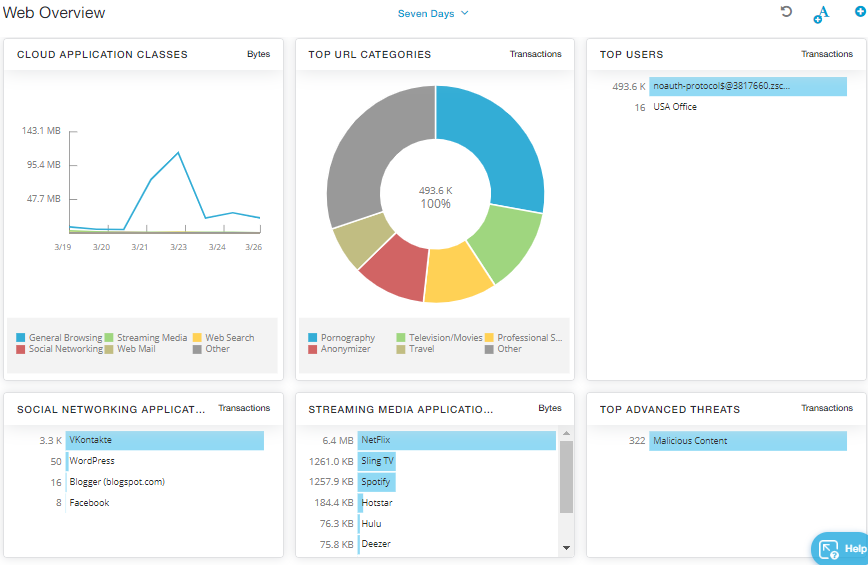
Source: Zscaler
6. Zero Networks Segmentation

Zero Networks Segmentation offers a simple approach to network segmentation, helping organizations block ransomware and lateral attacks. This automated, agentless solution creates and enforces microsegmentation policies by learning network connections, applying them to host-based firewalls, and leveraging MFA to protect sensitive assets.
Key features include:
- Agentless implementation: Enables deployment and scalability without the need for agents, reducing setup time and ongoing maintenance.
- Automated microsegmentation: Automatically learns network connections and creates segmentation policies. These policies are centrally applied to host-based firewalls.
- MFA-powered protection: Privileged and sensitive ports are closed by default and temporarily opened only after successful MFA authentication.
- Rapid deployment: Can segment an entire network in 30 days and eliminates manual intervention.
- Ransomware defense: By blocking lateral movement, acts as a ransomware auto-blocker, stopping attacks.
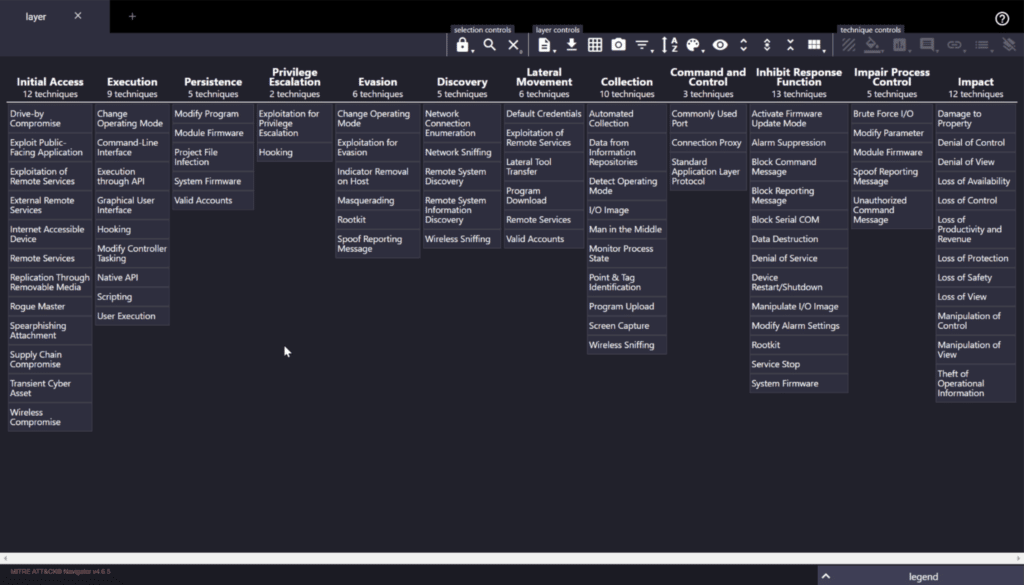
Source: Zero Networks
7. Xshield Enterprise Microsegmentation

Xshield Enterprise Microsegmentation is a platform to stop the lateral spread of ransomware and malware by creating micro-perimeters around every network asset. The tool simplifies microsegmentation with guided workflows, visualized insights, and non-disruptive implementation.
Key features include:
- Guided workflows: Automatic policy recommendations based on heuristics help organizations implement security measures.
- Continuous risk reduction: Provides an enterprise-wide baseline of security controls to reduce risk, then transitions to application-specific zero trust policies.
- Risk-based dashboards: Offers dashboards that provide a clear view of the organization’s security posture. These insights allow teams to track improvements and communicate results with stakeholders.
- Non-disruptive implementation: Policies can be simulated before enforcement, enabling organizations to validate their configurations without disrupting network operations.
- Visual policy design: Features a network map for defining approved and denied traffic flows.
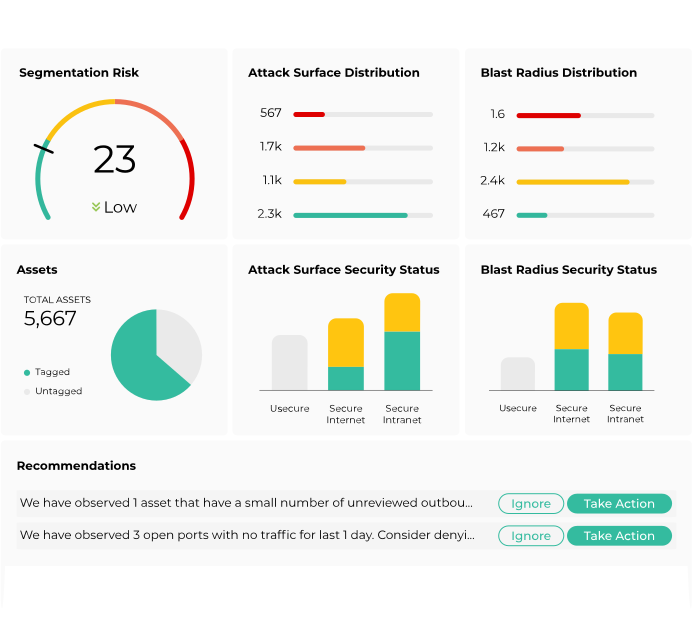
Source: Xshield
8. TrueFort Platform
TrueFort Platform supports microsegmentation to protect business-critical assets in complex, dynamic environments. By leveraging intelligent behavior analysis and automated policy enforcement, it prevents lateral movement and protects application performance.
Key features include:
- Deep asset discovery: Identifies workloads running within applications, providing an optimized view of the operating environment.
- Behavioral analysis with machine learning: Uses machine learning to understand workload behavior within applications. Establishes a trusted baseline and adapts to changes, helping security teams detect and control unusual behaviors.
- Application visibility: Automates the mapping of application relationships and data flows. Captures process details, user identities, and location data.
- Control over lateral movement: Enforces automated blocking of network connections, service account activity, and command-line executions that deviate from the norm.
- Automated policy recommendations: Policies are generated automatically based on observed workload activity, reducing the complexity of segmentation.
Conclusion
Microsegmentation tools support modern network security by reducing the attack surface, preventing lateral movement, and protecting sensitive data. By enabling granular policy enforcement, enhanced visibility, and zero trust principles across diverse environments, these solutions provide organizations with robust, adaptable protection.