







What Are Microsegmentation Solutions?
Microsegmentation solutions improve data protection by dividing networks into smaller, isolated segments. These segments are secured individually, limiting potential damage in case of a breach. By creating boundaries at the workload level, organizations can apply security policies consistently.
These solutions help control east-west traffic within data centers, offering more refined security than traditional firewall systems. The primary rationale behind microsegmentation is to minimize attack surfaces. Unlike traditional perimeter-based security approaches that guard against only external threats, microsegmentation manages threats from within, helping prevent lateral movement by attackers within the network.
In this article:
- Key Features of Microsegmentation Solutions
- Notable Microsegmentation Solutions
- How to Choose Microsegmentation Solutions
Key Features of Microsegmentation Solutions
Support for Zero Trust Architecture
Microsegmentation aligns with zero trust principles by validating every connection request within the network. This alignment ensures that security is not solely perimeter-based and incorporates internal threat mitigation. By enforcing strict access controls and authenticating each communication request, microsegmentation supports a zero trust architecture, minimizing breach risks.
The zero trust model assumes potential compromise, applying stringent security measures to all network interactions. Microsegmentation, with its segmentation and validation capabilities, complements this by ensuring that individual segments remain secure even with potential internal threats.
Learn more in our detailed guide to microsegmentation zero trust
Granular Policy Enforcement
Granular policy enforcement enables administrators to define precise security controls for each segment. This feature ensures that policies can be applied to even the smallest parts of a network, reducing the risk of unauthorized access. It enables an environment where permissions are rigorously managed, leading to a more secure network.
Precision in implementing security measures allows enterprises to apply a least-privilege model, which limits access based on necessity. With granular enforcement, companies can respond swiftly to threats as policies are automatically executed, minimizing potential vulnerabilities and meeting compliance requirements.
Visibility and Monitoring
Microsegmentation provides detailed visibility and monitoring across network segments. This is crucial for understanding data flows and identifying unusual activities. With monitoring, security teams can observe and log all interactions within and between segments, aiding in quick threat detection. Enhanced visibility ensures that any suspicious activity is flagged promptly.
Visibility into network operations helps in troubleshooting and forensic analysis. Security personnel can easily trace incidents to their origins, simplifying the investigation process. Understanding data flows also assists in optimizing network performance, as traffic patterns can be adjusted according to monitored insights, ensuring efficient resource allocation.
Dynamic and Automated Policy Management
As network environments evolve, policies must update to accommodate new workloads and changes. Automation in microsegmentation ensures that policies are consistently applied without manual intervention, reducing the likelihood of human error. Adaptability improves security posture by maintaining protection in rapidly changing IT landscapes.
Automating policy management also leads to operational efficiency. Security teams can focus on strategic tasks as routine policy updates and implementations are handled automatically. This approach ensures that security controls remain aligned with organizational growth and technological advancements.
Notable Microsegmentation Solutions
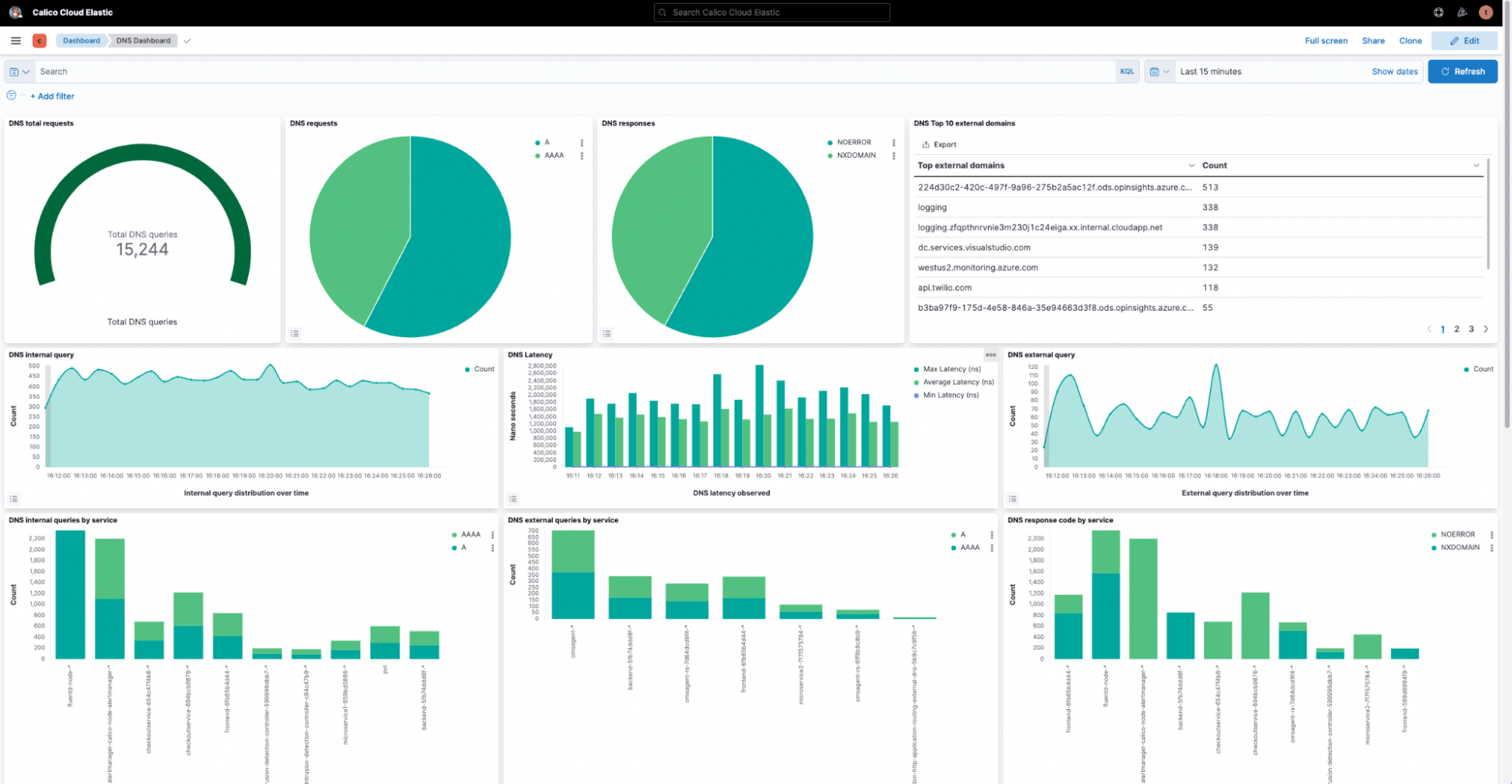
1. Tigera Calico

Calico is a network security and observability platform designed for securing workloads across containers, virtual machines, and bare metal. It provides dynamic network security policies to prevent unauthorized access and lateral movement.
Learn more in our guide to container security.
Key features include:
- Dynamic segmentation: Uses workload metadata to enforce segmentation policies automatically, ensuring consistent security as workloads scale.
- Policy enforcement: Supports microsegmentation with fine-grained policy controls at the workload level. Policies can be staged, previewed, and modified before deployment.
- Visibility: Provides detailed insights into network activity and policy impact, enabling security teams to optimize segmentation strategies.
- Scalability: Designed for high-performance enforcement across large-scale cloud and hybrid environments without centralized bottlenecks.
- Automated policy recommendations: Analyzes workload behavior and suggests security policies, reducing manual effort and simplifying microsegmentation adoption.
- Supports container, VM, and bare metal: Ensures consistent security policy enforcement across diverse environments, including containers, virtual machines, and physical servers.
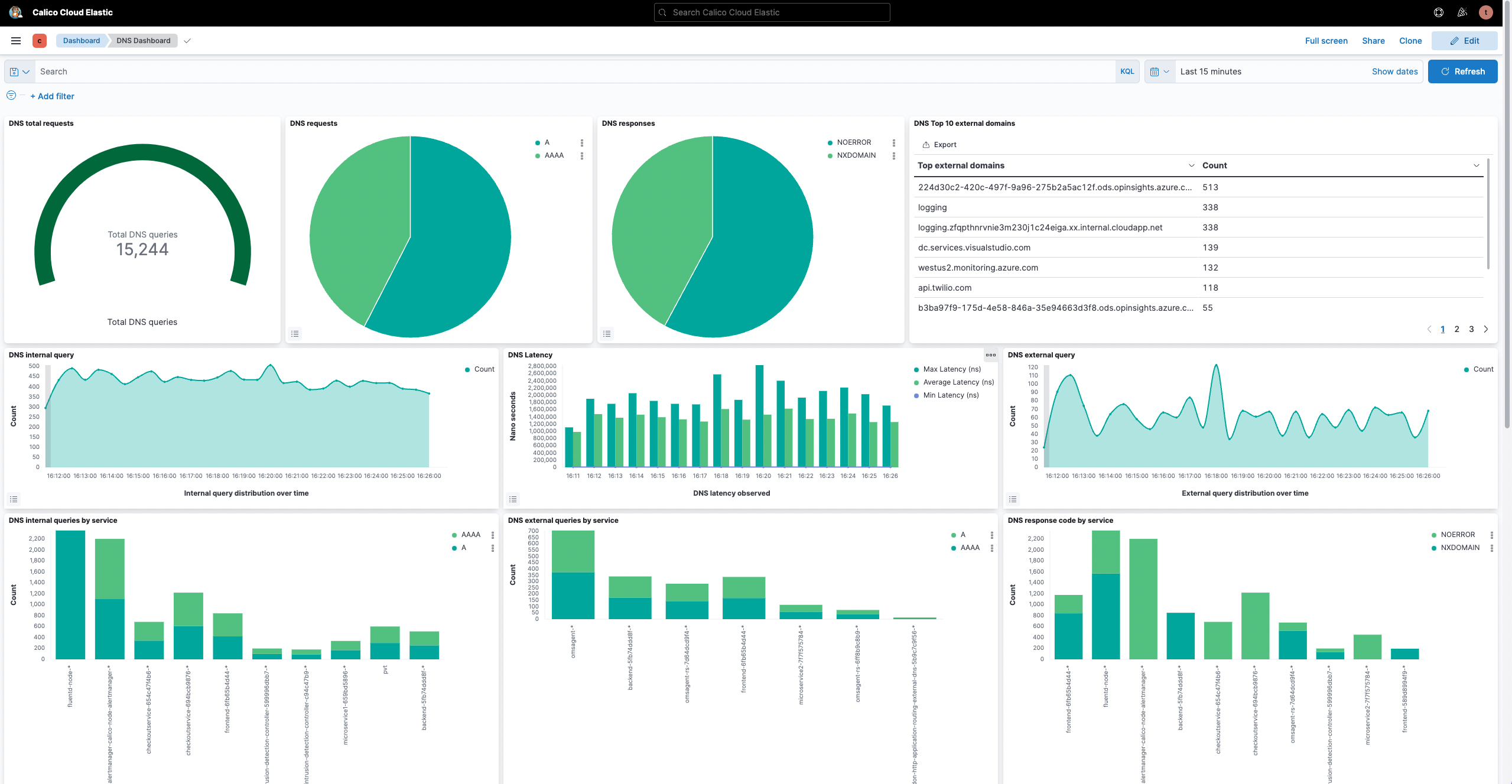
Source: Tigera
2. VMware NSX

VMware NSX is a network virtualization and security platform integrated into VMware Cloud Foundation. It offers a software-defined networking stack, enabling organizations to automate, manage, and secure cloud infrastructure across environments.
Key features include:
- Software-defined networking: Offers a software-based approach to network infrastructure.
- Layer 2–7 network and security services: Supports networking with security, load balancing, and overlay services.
- Single-pane management: Provides a unified interface to manage networking and security across multi-site and multi-cloud deployments.
- Declarative APIs for automation: Enables provisioning and operational efficiency using intent-based APIs for network policy automation.
- Self-service VPCs: Supports multi-tenancy and allows application teams to deploy and manage virtual private clouds independently.

Source: VMware
3. Illumio Core

Illumio Core is a microsegmentation platform to secure workloads across on-premises and cloud environments. It enables organizations to visualize application traffic, enforce zero trust segmentation policies, and contain threats, with a focus on preventing lateral movement.
Key features include:
- Traffic visibility: Offers a view of traffic across containers, virtual machines, and IT/OT systems.
- Breach containment: Allows enforcement of segmentation policies to stop ransomware and other threats from spreading.
- Policy recommendations: Automatically discovers services and suggests labels and segmentation policies.
- Vulnerability mapping: Integrates with vulnerability scanners to highlight services with risky or unknown connections, helping teams prioritize high-risk workloads.
- Scalable architecture: Designed to support organizations from hundreds to hundreds of thousands of workloads.

Source: Illumio
4. Akamai Guardicore Segmentation

Akamai Guardicore Segmentation is a software-based microsegmentation solution to protect assets and enforce zero trust principles across hybrid IT environments. It helps organizations stop lateral movement and reduce their attack surface without traditional security hardware.
Key features include:
- Microsegmentation: Enables control at the level of individual processes and services.
- Real-time and historical visibility: Delivers user- and process-level traffic insights in real time and over time.
- Platform support: Covers modern and legacy systems across data centers, clouds, and hybrid environments.
- Policy creation: Offers pre-built templates and guided workflows for quick policy definition.
- Decoupled enforcement architecture: Applies segmentation policies independently of the underlying infrastructure, making it easier to create, change, and scale rules.
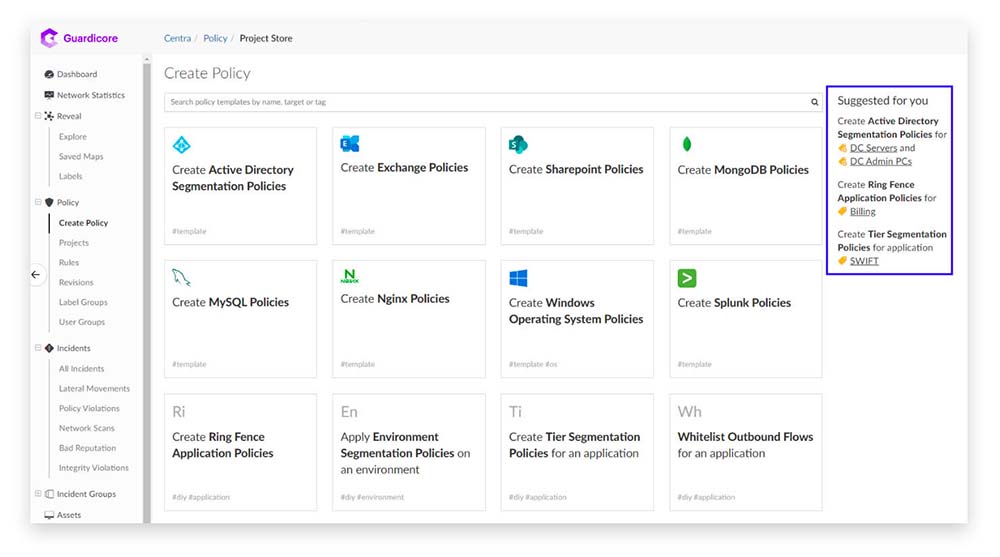
Source: Akamai
5. Cisco Secure Workload

Cisco Secure Workload is a microsegmentation solution that enforces zero trust security across application workloads. It provides visibility into workload behavior, allowing security teams to implement policies that reduce the attack surface and prevent lateral movement.
Key features include:
- Zero trust microsegmentation: Enforces security policies based on application behavior.
- Visibility: Offers insights into workload interactions and dependencies, enabling policy definition.
- Policy recommendations: Uses analytics to recommend segmentation policies for each application environment.
- Alerts and forensics: Delivers security alerts, forensic data, and audit trails to accelerate incident response.
- Deployment options: Available as both a SaaS solution and an on-premises appliance.
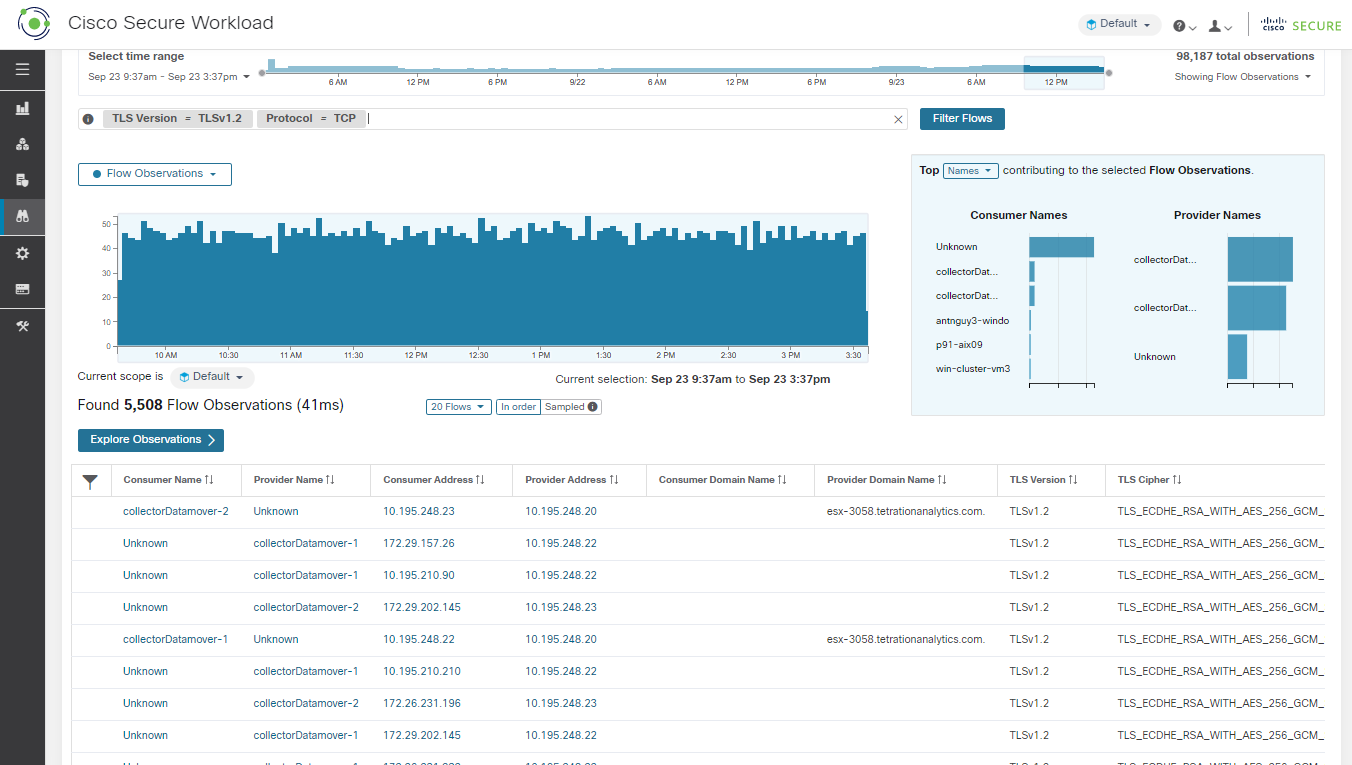
Source: Cisco
6. ColorTokens Xshield

ColorTokens Xshield is an enterprise microsegmentation platform that prevents lateral movement of malware and ransomware by placing micro-perimeters around network assets. It offers automated policy creation, global visibility, and risk-based controls.
Key features include:
- Guided workflows: Accelerates policy creation using pre-built templates and heuristic-based recommendations.
- Continuous risk reduction: Helps improve security posture with broad controls, then transitions to granular, application-specific zero trust policies over time.
- Visual policy design: Displays a network map to define and manage allowed and denied traffic flows.
- Non-disruptive implementation: Allows simulation of policies before enforcement.
- Auto-tagging: Automatically categorizes assets based on user-defined rules.
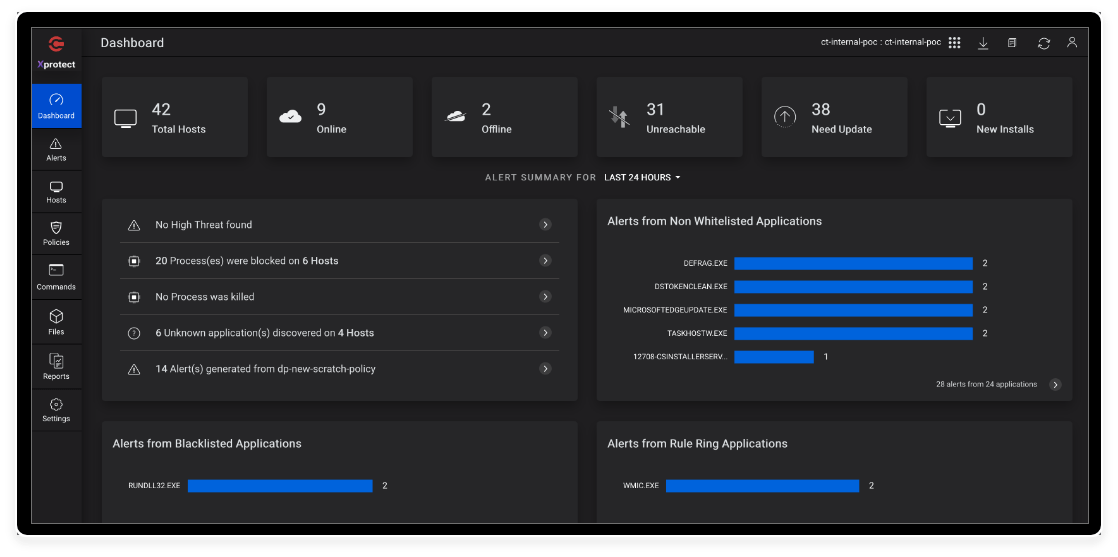
Source: ColorTokens
7. Fortinet FortiPolicy

Fortinet FortiPolicy is a microsegmentation and intent-based security solution intended to improve application and workload protection within the Fortinet Security Fabric. It uses agentless machine learning to automate discovery, policy recommendation, and enforcement across on-premises and OT environments.
Key features include:
- Intent-based cybersecurity: Uses context-aware machine learning to map connections, analyze workflows, and generate policies that enforce intended behavior.
- Microsegmentation at scale: Enables application-aware access controls, helping secure communications between workloads on the same subnet.
- Continuous discovery: Automatically detects and maps infrastructure changes across the environment, visualizing results in a map to support policy updates.
- Automated policy generation: Identifies connections and workloads, groups them by application tiers, and proposes access control policies to protect those segments.
- Adaptive security with microservices: Leverages containerized microservices for software-defined policy orchestration and enforcement.

Source: Fortinet
8. Zscaler Workload Segmentation

Zscaler Workload Segmentation is a host-based microsegmentation solution that emphasizes zero trust principles for cloud and on-premises workloads. It aids in reducing lateral movement, simplifying operations, and automating policy enforcement.
Key features include:
- Asset discovery: Automatically detects workloads across public clouds and on-premises data centers using user-defined tags, cloud metadata, and IP/subnet attributes.
- Flow-level visibility: Captures flow data—including 5-tuple, application names, and paths.
- Policy recommendations: Analyzes observed traffic flows to suggest segmentation policies.
- Host-level enforcement: Applies security controls at the workload level to prevent lateral movement and maintain consistent policy.
- Application maps: Visualizes traffic flows between resources, helping teams understand dependencies and define segmentation boundaries.
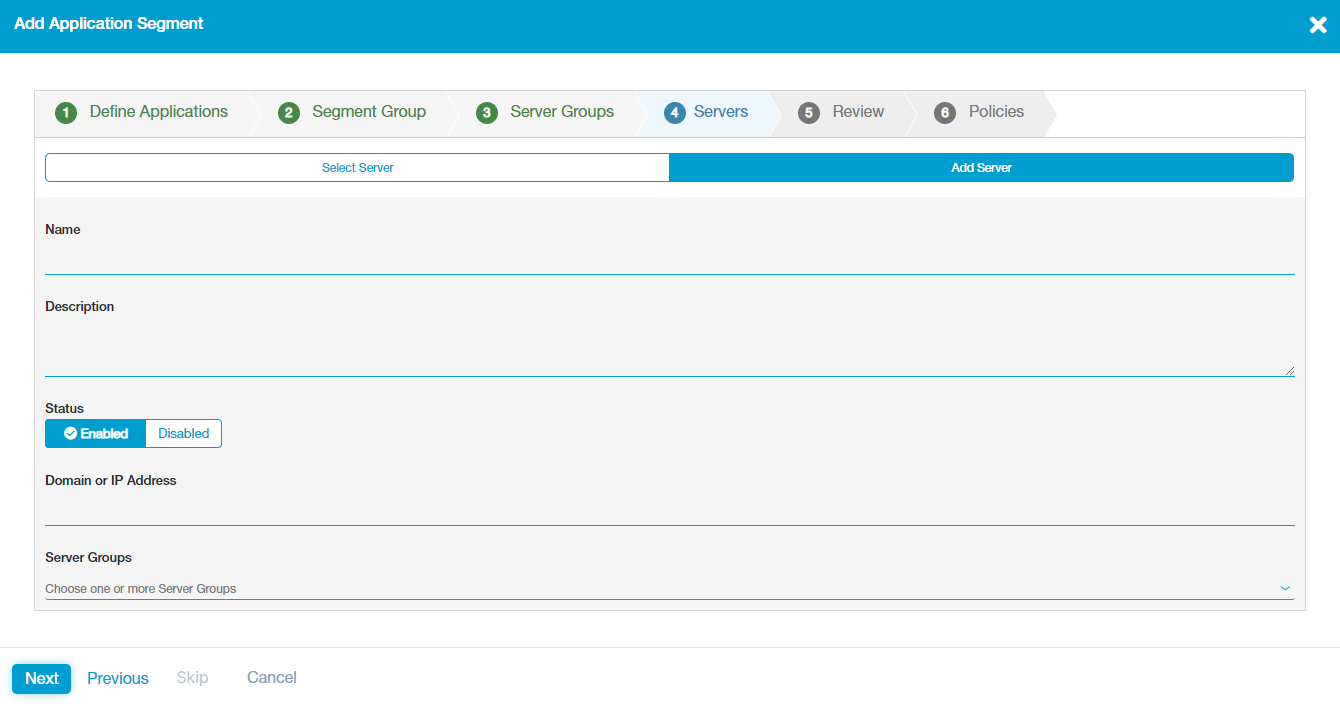
Source: Zscaler
How to Choose Microsegmentation Solutions
Selecting the right microsegmentation solution requires careful evaluation of technical needs, deployment environments, and organizational goals. While features may seem similar across vendors, real-world performance, integration, and scalability vary significantly.
For a broader overview of available options, see our guide on microsegmentation tools.
Key considerations include:
- Environment compatibility: Ensure the solution supports existing infrastructure—whether it’s on-premises, cloud-native, hybrid, or legacy systems. Look for multi-platform support, especially if using containers, VMs, and bare metal servers together.
- Granularity and enforcement method: Evaluate how the solution enforces policies—host-based, network-based, or via agents. Check if it supports process-level or service-level segmentation for more precise control.
- Policy management and automation: Look for tools that offer policy discovery, recommendation, and enforcement automation. Features like intent-based policies and pre-built templates can significantly reduce manual configuration and errors.
- Visibility and mapping: Choose a solution that provides real-time and historical visibility into application flows and dependencies. Interactive traffic maps and flow-level telemetry help in defining and validating policies.
- Integration with existing tools: Assess how well the solution integrates with the current security stack—SIEMs, vulnerability scanners, cloud management platforms, and identity providers.
- Scalability and performance: Consider how the solution handles scaling across thousands of workloads without degrading network or application performance. Decoupled architectures and microservices-based designs often perform better at scale.
- Incident response capabilities: Evaluate the availability of real-time alerts, forensic logging, and breach containment features. The faster a tool can isolate and mitigate threats, the more value it delivers.
- Compliance and reporting: If operating in a regulated industry, verify that the solution provides the audit trails and reporting needed for compliance with standards like PCI-DSS, HIPAA, or GDPR.
- Deployment and maintenance complexity: Assess ease of implementation, including guided workflows, simulation modes, and agent deployment.